


Western philosophy has long wrestled with the question of reality’s true nature. The pre-Socratics Parmenides and Heraclitus offered contrasting views: Parmenides saw true being as eternal and unchanging, while Heraclitus emphasised constant flux and becoming. This tension influenced Plato, who posited a dualism between eternal Forms and the changing world, and Aristotle, who grounded reality in substances that naturally develop over time.
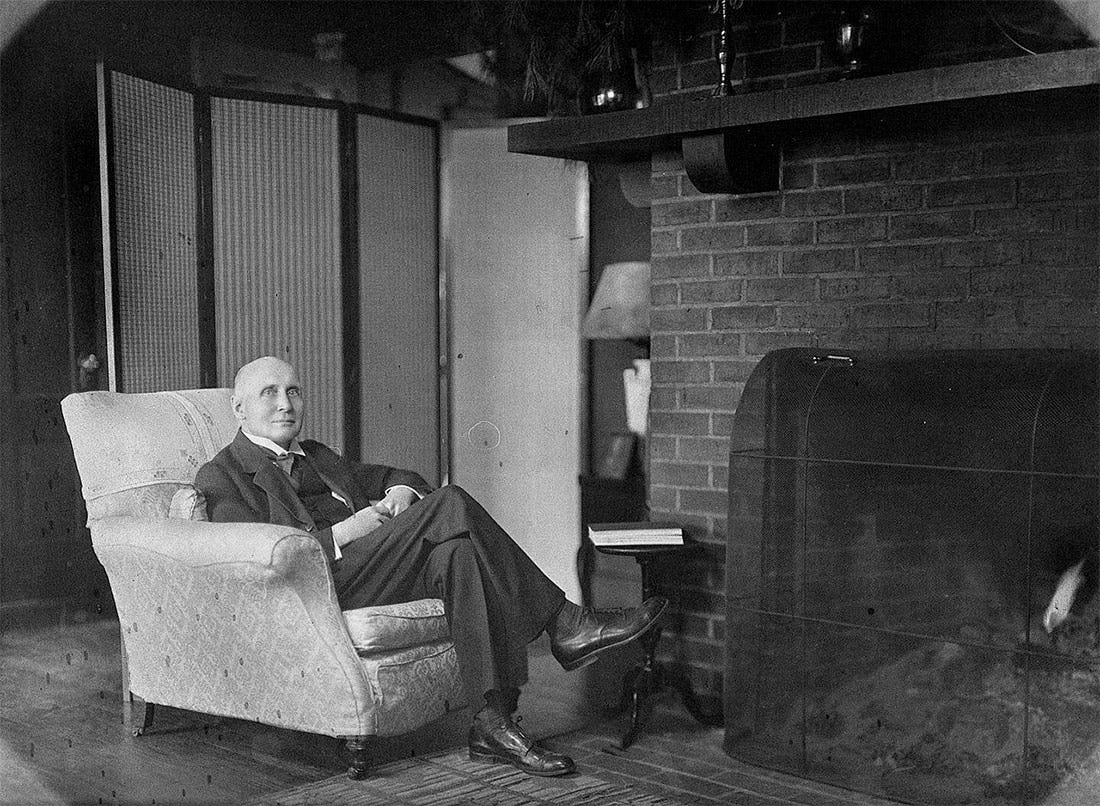
In the 20th century, the English mathematician and philosopher Alfred North Whitehead (1861-1947) offered a fresh perspective. He argued that neither Plato’s focus on eternal Forms nor Aristotle’s emphasis on change within enduring substances went far enough. For Whitehead, reality is not made of static things but of events and experiences. Instead of being, he emphasised becoming as the fundamental nature of existence itself.
His “philosophy of organism,” known as process philosophy, is a radical reimagining of how the world fundamentally works.1 Rather than cataloguing static entities, it describes reality as a living tapestry of interrelated processes. In an age shaped by systems thinking, quantum physics, and ecological awareness, Whitehead’s vision feels more relevant than ever.
Rethinking the Foundations
For centuries, Western metaphysics focussed on substance: These were enduring things with stable qualities. Plato divided reality into two realms: perfect, eternal Forms and the shadowy world of fleeting appearances, as famously illustrated in his allegory of the cave.2 Beauty, justice, or truth, for Plato, were unchanging ideals glimpsed only imperfectly through our senses.
Aristotle brought these ideals back down to earth, arguing that the essence of a thing is found in its natural unfolding. An acorn becomes an oak because of its inherent purpose, or telos.3 Yet, even Aristotle saw reality as built around stable entities moving through time.
Whitehead found these approaches lacking. He saw the world not as a collection of enduring things, but as a web of happenings. The universe, he said, is made of “actual occasions”—momentary bursts of experience that inherit, integrate, and pass on the world in miniature. Here, Whitehead echoes Henri Bergson, whom I’ve written about previously, who emphasised duration: the lived flow of time that resists being chopped into discrete moments.4 For both, reality is creative and evolving, more like a melody than a machine.
Consider the moment you receive a WhatsApp or Slack notification on your phone. This is not just a passive alert. It’s a unique event where the message, your relationship to the sender, your mood, and countless other factors come together. The moment “prehends” (takes account of) its past, perhaps recalling earlier conversations, and shapes your next thought or action. Each actual occasion is a tiny act of creation, a microcosm of the universe’s ongoing becoming.
A World Made of Experience
At the heart of Whitehead’s system is a simple but radical idea: experience is not confined to human consciousness but is the basic feature of all existence, a view the process philosopher David Ray Griffin called “panexperientialism.”5 Every actual occasion “feels” its predecessors in some way. Even the simplest unit of matter responds to its world.
This does not mean everything is conscious. A stone does not think or feel emotions, but it does respond to the warmth of the sun by absorbing heat. In Whitehead’s terms, this is prehension: the stone takes account of its environment, integrating it into its own becoming.6 Feeling, then, is not subjective awareness but a fundamental act of relation, describing how entities connect and influence each other.
This view echoes Baruch Spinoza’s idea of conatus—the universal drive to persist and flourish in relation to everything else.7 Like Whitehead, Spinoza saw existence as active participation in the whole. William James, the great American pragmatist, described reality as “one great blooming, buzzing confusion” of experiences in flux.8 His radical empiricism aligns with Whitehead’s insistence that reality is made of felt relations. These are dymanic becomings rather than inert things.
In this light, a human mind is not a self-contained thinker but a complex society of experiences built from simpler ones. A tree, a rock, a river, a star: each is a dynamic process composed of countless interrelated events. The cosmos, in this view, is a creative organism, not a static machine.
This perspective also resonates with Iain McGilchrist, a contemporary thinker who critiques the West’s reliance on abstract, detached modes of thinking. He calls for a return to a more relational, embodied understanding of reality.9 Like Whitehead, McGilchrist sees the world as a participatory process in which meaning emerges through relationship.

Creativity and the Flow of Time
For Whitehead, creativity is the universe’s most basic fact.10 Each actual occasion is a unique synthesis. It is a moment where the past is felt, decisions are made, and a new world emerges. Reality is not pre-scripted; it is improvised.
Take a gardener tending a vegetable patch, a chef creating a new dish, or an athlete playing a team sport. Each builds on what came before—working with the soil and seasons, drawing on recipes and ingredients, or responding to the flow of the game—yet each introduces something new. The result is not predetermined but emerges through creative engagement. In the universe, each actual occasion inherits the past, adds its own novelty, and passes it on. As Whitehead put it:
“The many become one, and are increased by one. In other words, a novel entity emerges from the process, and is added to the multiplicity of the world.”11
This is the creative advance of the cosmos: a perpetual flow where time is not a container but a direction of growth.
This echoes Martin Heidegger’s idea of being-in-the-world: existence as participatory unfolding, not objective presence.12 Heidegger was challenging the traditional philosophical view—rooted in Descartes and others—that sees the self as a thinking subject standing apart from an objective world of things. Instead, he argued our primary way of existing is participation and involvement in the world’s ongoing unfolding. For Whitehead, this insight applies not just to humans but to the cosmos as a whole.
If everything is in process, then identity, purpose, and even truth are not fixed but evolving. The self is not a thing but a rhythm of experience. It is a thread in the wider weave of becoming. Consider a person’s sense of self: much like David Hume’s “bundle of perceptions,” it is made up of ever-changing thoughts, feelings, and memories, woven together over time.13 Just as a river’s waters flow and change, our identities are shaped by ongoing experiences, relationships, and choices. To live is to participate, to respond and contribute.
Even God, for Whitehead, is not an omnipotent architect outside of time, but a participant in process: an eternal lure toward greater beauty and harmony, co-creating with the world. As he wrote, “God is the unlimited conceptual realisation of the absolute wealth of potentiality.”14
Ethics in a World of Becoming
Whitehead’s metaphysics leads to a different kind of ethics, one that values relationship, responsiveness, and co-creation over fixed rules. He wrote, “Life is an offensive directed against the repetitious mechanism of the universe.”15 While the world contains patterns and regularities (“mechanism”), true life is characterised by its ability to break out of mere repetition and introduce novelty and value into the world.
If reality is an interrelated process, then our actions always ripple outward. We are never truly isolated; every choice we make shapes not only our own future but also the becoming of others. In this view, ethics becomes the art of creative response. It is about contributing to the world’s ongoing evolution and enrichment.
This is not relativism or moral chaos. Instead, it invites us to see morality as living attention: How do we take account of others? How do we add beauty, harmony, and intensity to life’s unfolding? Compassion, in this view, is not sentimental but realistic. We are part of one another’s becoming.
This relational ethics also poses challenges. What happens when one entity’s becoming impedes another? For example, consider the balance between playing banging dance music at home and respecting a neighbour’s need for quiet. In process thought, such conflicts are not resolved by abstract rules but by seeking harmonies that enhance the overall intensity of experience. This might mean agreeing on quiet hours or sharing music together. Similarly, balancing your own need for personal time with the needs of friends or family for connection requires ongoing negotiation and responsiveness. Responsibility is shared; every action ripples through the web of relations, making us accountable for how we contribute to the whole.
Whitehead and the Modern Mind
Though often overlooked in mainstream philosophy, Whitehead’s ideas speak to today’s urgent concerns. In ecology, his emphasis on interdependence offers a philosophical foundation for valuing biodiversity and understanding the intrinsic richness that each species brings to the whole ecosystem. In systems thinking, his process philosophy underpins approaches that see organisations, societies, and natural environments as dynamic networks of relationships rather than collections of isolated parts.
In quantum physics, particles are not things but probabilistic events, entangled across space and time, mirroring Whitehead’s vision of reality as a web of relational processes.16 In consciousness studies, the old split between mind and matter is dissolving, aligning with Whitehead’s panexperientialism.17 Thinkers like McGilchrist support this shift, arguing that consciousness is inherently relational and participatory. In technology and AI, identity and intelligence are becoming fluid and distributed. Whitehead’s framework invites us to see AI not as a fixed entity but as a society of occasions, challenging us to rethink agency and creativity.
Whitehead anticipated these shifts—not in technical detail, but in philosophical spirit. His work has inspired thinkers like John Cobb (who applied process thought to interfaith dialogue),18 David Ray Griffin (who used it to reimagine humanity’s place in nature),19 and Ray Peat (who explored process thought in biology).20 He also influenced contemporary voices such as Rupert Sheldrake, whose concept of morphic resonance and critique of mechanistic science reflects Whitehead’s vision of a living, interconnected universe,21 and Terence McKenna, who drew on Whitehead’s ideas of novelty and process to articulate his own vision of a creative, participatory cosmos.22 Whitehead’s legacy continues to shape those seeking a new metaphysics grounded in connectedness and becoming.
Why It Matters Now
In a time of social fragmentation and technological acceleration, the old worldview (of fixed hierarchies, isolated individuals, and mechanical systems) feels outdated. Whitehead invites us to see the world as process, to recognise ourselves as co-creators rather than separate observers, and to trade control for participation, certainty for sensitivity, permanence for presence.
He offers a synthesis of the ancient tension between Plato and Aristotle. Where Plato saw eternal Forms and Aristotle saw unfolding purposes (telos), Whitehead sees both change and order as essential to the creative advance of the universe. Reality is a dynamic interplay of novelty and harmony, with each moment contributing to an ever-richer whole.
Whitehead’s philosophy is demanding. It asks us to let go of deep assumptions. But in return, it offers a vision of reality that is dynamic, relational, and life-affirming. As he wrote, “The art of progress is to preserve order amid change and to preserve change amid order.” We are part of that progress, not as spectators, but as participants in the dance of becoming.
Six Ways to Bring Whitehead into Everyday Thinking
Think in relationships, not things.
Ask: “What is it becoming, and with whom?”
Value experience at every scale.
Recognise that everything, from microbes to minds, contributes to its own becoming.
Practice ethical responsiveness.
Ask: “How do my actions ripple across the web of life?”
Stay open to novelty.
Progress is creative adaptation, not control. Let life surprise you.
Cultivate presence.
Time is a creative flow. Each moment matters deeply.
Live as part of the whole.
You’re not a separate observer. Dance within life’s unfolding rhythm, not above it.
If you fancy going deeper, this is a good talk by process philosopher Matthew D. Segall on Whitehead’s Philosophy of Organism:
Whitehead, A. N. (1929). Process and reality: An essay in cosmology. New York: Macmillan.
In the allegory, prisoners are chained inside a cave, only able to see shadows cast on the wall by objects behind them. These shadows represent the world of appearances—what we perceive with our senses—which Plato considers to be mere reflections or imitations of the true reality. When a prisoner escapes and sees the world outside the cave, he encounters real objects and, ultimately, the sun, which symbolises the highest Form (the Form of the Good) and the source of all truth and reality. Plato uses this story to argue that the world we perceive with our senses is only a shadow or copy of the true, eternal world of Forms (or Ideas), and that true knowledge comes from turning away from the world of appearances and grasping the unchanging, perfect Forms through philosophical reasoning.
Aristotle’s telos is the built-in end, goal, or purpose that explains why something exists and what it is meant to become. Understanding telos is central to his explanations in biology, ethics, and metaphysics, and it is the foundation of his teleological worldview. For Aristotle, to truly understand something—whether it’s a living organism, a tool, or a human life—you must know its telos: the ultimate reason for its existence or the function it is meant to fulfill.
Henri Bergson and the Flow of Time: A Journey Beyond the Clock (Substack post)
David Ray Griffin (1939–2022) was an influential American philosopher of religion and theologian, best known as a leading figure in process philosophy and process theology. Griffin’s philosophical and theological interests were wide-ranging, including ontology, epistemology, the problem of evil, postmodernism, ecology, and the relationship between religion and science. He was particularly interested in applying the process philosophy of Alfred North Whitehead and Charles Hartshorne to traditional theological questions, arguing that process theology provides a strong basis for addressing contemporary social and ecological issues.
In Whitehead’s philosophy, prehension is the fundamental process by which entities relate to, grasp, or “take account of” other entities and their environment. Rather than being passive or merely representational, prehension is an active, dynamic process that underlies all existence: every “actual occasion” (the basic unit of reality in process philosophy) prehends aspects of its past and its surroundings, integrating them into its own becoming.
In his Ethics, Baruch Spinoza (1632-1677) defines conatus as the inherent striving or endeavor of each thing to persist in its own being. He famously states: “Each thing, insofar as it is in itself, strives to persevere in its being” (Ethics, Part III, Proposition 6). This striving is not limited to human beings but is a fundamental feature of all natural things. For Spinoza, conatus is the actual essence of any individual—what makes it what it is—and it drives all behavior and activity. In humans, this manifests as the desire for self-preservation and the pursuit of what increases our power of acting (joy), while avoiding what diminishes it (sadness).
In his classic work, The Principles of Psychology (1890), William James (1842-1910) describes the sensory experience of an infant:
“The baby, assailed by eyes, ears, nose, skin, and entrails at once, feels it all as one great blooming, buzzing confusion; and to the very end of life, our location of all things in one space is due to the fact that the original extents or bignesses of all the sensations are so superposed.”
James was illustrating that, at birth, human experience is a chaotic, undifferentiated mass of sensory input. The infant’s world is not yet organised into distinct objects or concepts; it is simply a continuous, overwhelming flow of sensations. Only gradually, through development and learning, do we come to parse and structure this confusion into meaningful perceptions and categories. Whitehead took over from James at Harvard and referred to him as “The American Plato.”
McGilchrist contends that reality is fundamentally relational: “relationships are ontologically primary, foundational; and ‘things’ a secondary, emergent property of relationships” (The Matter With Things, ch.24, p.1006). He writes that “entities become what they are only through their situation in the context of multiple relations,” and that “the world absolutely cannot be properly understood or appreciated without imagination and intuition, as well as reason and science.”
For Whitehead, creativity is the underlying principle that makes change, novelty, and growth possible. Every “actual occasion” is an act of creativity: it draws on the past, integrates influences, and contributes something new to the world. Thus, the universe is not a finished structure but a continuous, creative advance, where everything participates in the emergence of new possibilities. Creativity, in this sense, is the ultimate principle that drives the unfolding of reality itself.
Each “actual occasion” is a process of integration. It takes (“prehends”) the many influences and experiences of the past and synthesises them into a new unity—a “one.” But this new “one” is not just a repetition or sum of the past: it is a novel entity, adding something new to the universe. Thus, “the many become one, and are increased by one.” This captures the creative advance of the universe: Reality is not static, but a continuous process where multiplicity is unified into new forms, and each new form enriches the world.
Martin Heidegger (1889-1976) introduces the concept of “being-in-the-world” (In-der-Welt-sein) in Being and Time. He argues that human existence (Dasein) is not best understood as a detached subject observing an external world (the “objective presence” or Vorhandenheit), but as fundamentally involved and engaged in a meaningful context. He says, “Dasein is never ‘proximally’ a being which is merely present-at-hand vorhanden within the world, as a subject, or as a thing… Rather, as being-in-the-world, it is absorbed in the world as care, concern, and involvement.” We are always already “thrown” into a context of relationships, meanings, and possibilities. The world is not a collection of objects “out there,” but a network of significance in which we are always engaged. This insight underpins much of existential and phenomenological philosophy, and it resonates with process thought’s emphasis on relationship and becoming.
David Hume’s (1711-1776) “bundle theory” holds that the self is not a single, unchanging entity, but rather a collection—or bundle—of ever-shifting perceptions, sensations, and experiences. According to Hume, when we look inward, we never find a stable “self” behind our thoughts and feelings; instead, we find only a sequence of mental events linked by memory and association. The idea of a unified self is, for Hume, a convenient fiction that arises from the mind’s habit of grouping these experiences together, much like a chain is nothing more than its individual links.
Whitehead uses this phrase to articulate his unique conception of God within process philosophy. God’s primordial nature is not a creator in the traditional sense, but the source and reservoir of all possible forms, relationships, and potentials that could be actualised in the universe. This aspect of God is eternal, abstract, and unchanging—it is the “lure” for creativity, offering every actual occasion its possibilities for becoming. Thus, God is not an omnipotent ruler dictating outcomes, but the principle that holds and presents the infinite range of possibilities from which the world’s creative process draws.
In ethics, this means that moral life is not about rigidly following static rules or laws. Instead, it is about responsiveness—actively engaging with the world, others, and new situations in creative and relational ways. Whitehead’s approach values the quality of lived experience and the contribution each act makes to the ongoing process of reality. Each choice or action is an opportunity to enhance value, beauty, and harmony, not just for oneself but for the wider community of beings.
In quantum physics, particles are not discrete, permanent objects but rather probabilistic events described by wave functions. Their properties (like position or spin) exist as probabilities until measured. This phenomenon is called “superposition.” Additionally, particles can become “entangled,” meaning their states are inseparably linked across space and time; measuring one instantly determines the state of the other, even at great distances. This non-local interconnectedness mirrors Whitehead’s metaphysics, where reality consists of interdependent processes (“actual occasions”) rather than isolated substances. Both frameworks emphasise relationality, dynamism, and the contextual emergence of properties.
Many contemporary thinkers in consciousness studies and philosophy of mind are moving away from the traditional Cartesian “split” between mind and matter. Instead, there is growing interest in views that see consciousness and experience as fundamental aspects of reality, not as emergent properties of purely physical systems. Panexperientialism holds that experience is a basic feature of all existence, not just of complex organisms. This view challenges the idea of a strict division between mind (experience) and matter (non-experiential stuff), and instead sees reality as a continuum of experience at various levels of complexity. The “hard problem” of consciousness—how subjective experience arises from physical processes—has led many philosophers to reconsider panpsychist and panexperientialist alternatives to standard physicalism. These alternatives suggest that experience is not something that emerges from non-experiential matter, but is rather a fundamental aspect of reality itself.
John Cobb applied process thought to interfaith dialogue by developing a model of religious pluralism rooted in Whitehead’s process philosophy, emphasising mutual transformation, openness, and the creative integration of diverse religious insights.
Griffin argued that the dominant scientific worldview—rooted in mechanism and dualism—treats nature as inert, valueless matter governed by fixed laws, with humanity standing apart as a rational, spiritual exception. He saw this as a root cause of ecological crisis and alienation from the natural world.
Ray Peat and the Biology of Being Alive: Towards a Vital Metabolism (Substack post)
Rupert Sheldrake, a biologist known for his theory of morphic resonance, has openly acknowledged the influence of Alfred North Whitehead on his thinking. Sheldrake draws on Whitehead’s “organismic” or process philosophy to critique mechanistic science and to propose a view of nature as fundamentally relational, evolving, and interconnected. In interviews and writings, Sheldrake credits Whitehead’s metaphysics as providing a philosophical foundation for his own ideas about memory, habit, and the living universe.
Terence McKenna (1946-2000), the influential ethnobotanist and philosopher, frequently cited Whitehead as a major inspiration for his own thinking. McKenna described Whitehead as his “mentor” and credited him with providing a rigorous metaphysical framework for understanding reality as a process of creative becoming. He drew on Whitehead’s concepts of novelty and process in developing his own “novelty theory,” and encouraged audiences to read Whitehead’s works, including Science and the Modern World (1925). McKenna’s vision of a dynamic, interconnected universe owes much to Whitehead’s process philosophy.
It amazes me how much process philosophy mirrors indigenous worldviews, revealing how verb-focused languages sustain a “process” perspective with all our relations.