


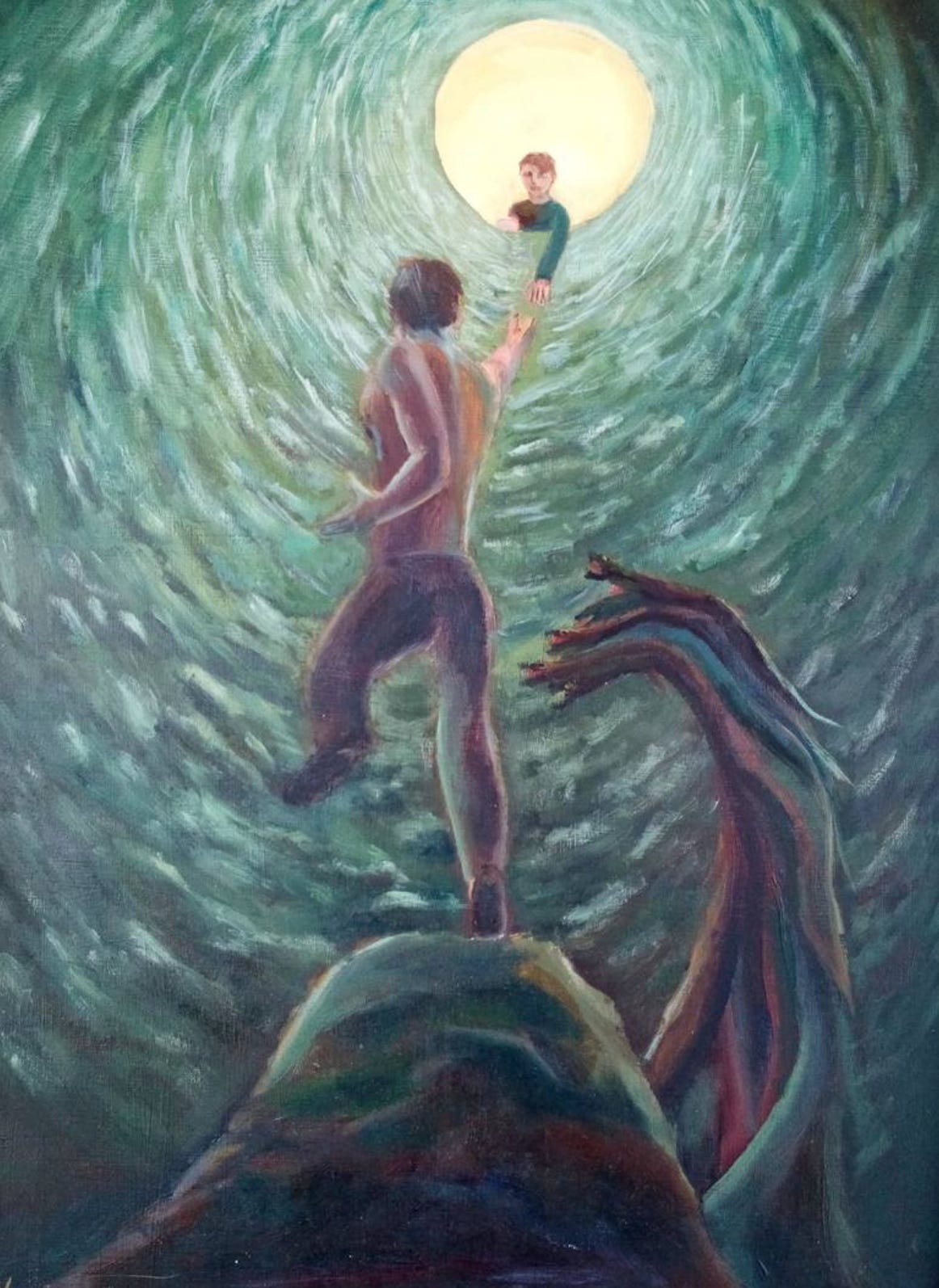
On a scale of 0-10, how hopeful do you feel? For the German utopian philosopher Ernst Bloch (1885–1977), hope was never just a fleeting wish or a comforting thought. He saw hope as a powerful, dynamic force at the heart of human existence. Writing in the aftermath of two world wars and amid the alienation of modern capitalism, Bloch argued that hope is essential to being human. It drives us to imagine and strive for futures that have not yet arrived but are urgently needed.
Bloch described hope as active, creative, and collective. He saw it as a compass for navigating despair and a call to demand change. In our time of growing pessimism and widespread disillusionment, his philosophy offers a positive vision of building futures grounded in hope and collective action.
Yet Bloch’s vision also speaks to the individual, inviting anyone feeling lost or overwhelmed to see hope as a quiet, persistent force that can help us find direction and meaning, even in the darkest moments. He encourages us to imagine a movement toward greater coherence and meaning, where hope becomes a creative energy drawing people together to shape a more integrated and positive world.
Hope Is Not Optimism
Hope and optimism are often used interchangeably, but Bloch made an important distinction between them. Optimism is the belief that things will get better on their own, without us needing to do much. It can lead to passivity or even complacency. Hope, on the other hand, asks more of us. It requires imagination, courage, and a willingness to act, especially when the outcome is uncertain or the path forward is unclear. Bloch called this “militant optimism”: a determined refusal to accept the present as the only possible reality, and a commitment to imagining and working toward something better.1
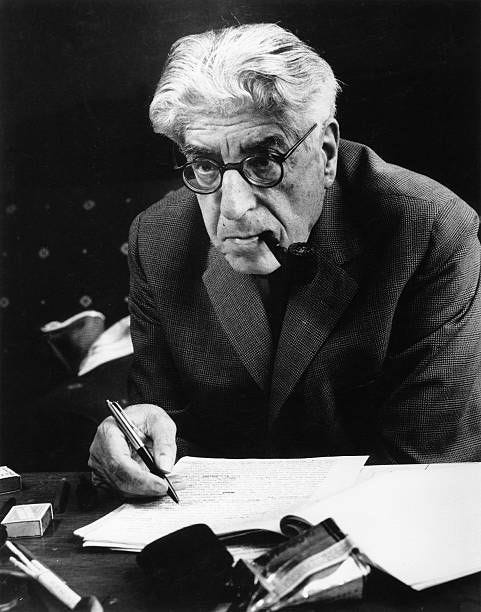
This way of thinking about hope connects with other philosophers, too. Gabriel Marcel described hope as a commitment to keep going and to stay true to our values, even when things are hard.2 Hannah Arendt wrote about “natality,” the idea that every person has the ability to begin again and create something new.3 Bloch’s version of hope stands out because it is so grounded in the real world. He saw hope as something that emerges not just from abstract ideals, but from real possibilities and material conditions. Walter Benjamin, another thinker from Bloch’s era, saw hope as something that appears in rare, transformative moments—though often with a sense of sadness for what has been lost.4 Jonathan Lear’s idea of “radical hope” also echoes Bloch: it’s the kind of hope that helps us imagine new ways forward, even when familiar paths have disappeared.5
The “Not-Yet” of Anticipatory Consciousness
At the heart of Bloch’s philosophy lies the concept of the “not-yet.” He believed human consciousness is always reaching for possibilities that have not yet been realised. We glimpse better futures in the present through art, dreams, or everyday acts of resistance. This forward-looking awareness is rooted in the real world, where signs of the “not-yet” appear in literature, music, and collective action.
For Bloch, art, especially music, offers a way to glimpse the future we long for but haven’t yet reached. He believed that music does more than simply mirror our current reality. When we listen to a stirring piece of music, we can feel inspired, uplifted, or even transported to a better world, if only for a moment. In this sense, music gives us a taste of what could be, not just what is. It stirs our imagination and encourages us to hope for change, and to come together with others. This ability of music to bring people together, to create harmony and a sense of possibility, makes it a vivid example of hope in action. It helps us move forward, both individually and as a community.
Through music, we can feel the sense of possibility, the “not-yet,” right here in our everyday lives. Songs like Sam Cooke’s “A Change is Gonna Come,” John Lennon’s “Imagine,” and Bob Dylan’s “Blowin in the Wind” express hope while encouraging us to imagine and work toward a better future. This same spirit shows up in small, everyday actions: when people start a communal garden, gather to clean up a local park, organise a food bank, or when a child draws a picture of a world they’d like to see. Bloch called these “concrete utopias.” They are not just dreams, but real steps toward a future that could actually happen, practical examples of hope taking shape in the world around us.
This orientation toward the future in Bloch’s thought resonates with Martin Heidegger’s concept of “anticipatory resoluteness.”6 For Heidegger, authentic existence involves anticipating one’s “ownmost” possibilities—including the inevitability of death—and living resolutely in light of them. Rather than accepting the present as fixed, Heidegger’s anticipatory stance calls for actively projecting oneself toward what could be, and making choices shaped by this awareness of future possibilities.
Hope Keeps Us Afloat
Hope is a philosophical idea with real, transformative power. In the 1950s, psychologist Curt Richter conducted a now-famous (and brutal) experiment to investigate how long rats would persist in a seemingly hopeless situation.7 He placed thems in jars of water and observed how long they would swim before giving up. Most rats lasted only about 15 minutes before succumbing to exhaustion and drowning. However, when Richter rescued the rats just before they drowned, allowed them to rest a little, and then returned them to the water, the rats swam for much longer. On average, they lasted 60 hours. One rat even went for 81 hours (more than 3 days)! Richter concluded that the expectation of rescue dramatically increased their perseverance and survival. Hope, it seems, can literally be a matter of life and death.

Bloch’s philosophy shows that hope can make a real difference in people’s lives. When we believe that things can get better, we often find the strength to keep going and to think creatively, even during tough times. This isn’t just true for large groups or social movements; it matters for individuals too. If someone is feeling lonely, lost, or uncertain, simply holding onto the idea that change is possible can help them take small steps forward. Over time, these small acts can lead to renewal and new opportunities. We see this spirit in people who start new businesses or charity projects, in groups that work together to solve problems, and in artists who create work that inspires others. For Bloch, hope is a vital source of energy that sustains people and communities, fostering resilience and opening up new possibilities for growth.

Resisting Despair
Today, it’s easy to feel overwhelmed by despair. Doomscrolling, political division, and growing inequality can leave many people feeling cynical or hopeless. A recent example of this pervasive “mood” is Adam Curtis’ new BBC documentary series, “Shifty: Living in Britain at the End of the Twentieth Century.” The series examines how British society underwent profound changes from the late 1970s to the end of the 20th century, resulting in a fragmented, uncertain, and often melancholic national mood.8 Curtis explores the collapse of shared narratives and the rise of individualism, arguing that the decline of collective purpose—and the constant replaying of Britain’s past through the media—have left the country unable to imagine a clear future. He uses archival footage, pop music, and personal stories to illustrate these shifts, painting a grim portrait of a nation where “nothing works, nothing changes, and nothing has come along yet to be the next ‘thing’.” The result is a lingering sense of anger, sadness, and dread.
While Curtis paints a portrait of a nation weighed down by inertia, Bloch invites us to see despair not as an unavoidable condition, but as a sign that our imagination has stalled. It is a moment when we forget to notice the seeds of change already present in our lives. Everyday acts of kindness, the dedication of volunteers, and the resilience shown by people in times of crisis all remind us that new possibilities are always emerging. On a personal level, even small steps, like reaching out to a friend, starting a new routine, or simply choosing to believe that things can get better, are acts of hope that help us move forward.
Bloch’s idea of hope encourages us to think critically and to question the idea that things must stay as they are. We see hope in action when educators inspire students to realise their potential, when individuals find strength to overcome illness or loss, and when breakthroughs in science and technology reveal new possibilities. These examples show that hope is not tied to any one group or belief system. Instead, it’s a universal human capacity, the ability to imagine and work toward a better future while refusing to let present circumstances limit what’s possible.
The Syntropic Dimension of Hope
Bloch’s philosophy can also be understood through the lens of syntropy: the natural tendency toward greater order, connection, and creativity. While entropy is about things falling apart, syntropy is about things coming together and growing.9 For Bloch, hope acts like a syntropic force. It brings together scattered efforts, helps people connect, and points us toward futures that are more harmonious and fulfilling. You can see this in the way communities rebuild after disasters, in the creation of new art forms, and in the shared dreams that inspire change. Thinking of hope as syntropic helps us see it as both a source of strength and a guiding principle for building a more positive and coherent world.

Hope as a Collective Practice
For Bloch, hope is something we do together. It grows strongest in communities, social movements, and shared efforts. The Civil Rights Movement in the United States, with its vision of equality and collective courage, is one example. So are modern worker-owned businesses and cooperatives, which show new ways of organising work and resources. Hope can spread, creating the conditions for solidarity and joint action.
This collective side of hope connects Bloch to other thinkers like the educationalist Paulo Freire, who saw hope as something we build together,10 and Peter Kropotkin’s idea of mutual aid: the natural tendency for cooperation and support that helps communities survive and thrive.11 Bloch’s background in Marxist thought adds an emphasis on real-world conditions, insisting that hope is closely tied to the struggle for justice. His philosophy encourages us to ask: What kind of future can we create together? How do our shared actions shape what’s possible?
Why Bloch Matters Today
In a time when many people feel burned out by constant bad news and stories of crisis, Bloch’s philosophy of hope offers a different perspective. His vision is bold, creative, and practical. He reminds us that we are beings of possibility, capable of shaping futures that are not determined by the present.
Hope does not erase pain or injustice, but it gives us the energy to keep pushing for change. It encourages us to ask: What is missing? What could be different? How can we work toward that, together?
As Bloch wrote, “The most tragic form of loss is the loss of the capacity to imagine that things could be different.” To live with hope is to keep our imagination alive, to notice the cracks where light enters, and to act—individually and together—to make the “not-yet” real.
To dig deeper, Stephen West, one of the pioneers of philosophy podcasting, recently did an episode on Ernst Bloch and his philosophy of hope, exploring how Bloch reframes existential despair as a surplus of hope and highlights the role of art and music in envisioning new possibilities:
Bloch’s notion of “militant optimism” appears throughout his major work, The Principle of Hope (1954–1959), where he distinguishes between passive optimism and a more engaged, active stance. For Bloch, militant optimism is not a naïve belief that things will improve on their own, but an insistence on the possibility of real change through persistent effort and imagination. It is “militant” because it involves struggle, commitment, and the courage to confront obstacles, refusing to accept the status quo as inevitable. This optimism is closely linked to his idea of the “not-yet,” urging individuals and societies to become agents of transformation rather than mere spectators of history.
Gabriel Marcel (1889-1973), the French existentialist philosopher, saw hope as an active response to the temptation of despair. For Marcel, hope is not passive wishing but the act by which we overcome despair and remain faithful to others and to ourselves. He linked hope closely with “creative fidelity”—the ongoing, imaginative commitment to relationships and promises, even in uncertainty. Hope, in this sense, provides the strength to sustain fidelity and to continually create meaning and connection in our lives.
Hannah Arendt’s (1906-1975) concept of “natality” refers to the human capacity to begin anew, rooted in the fact that each person is born into the world with the potential to initiate original actions. In The Human Condition (1958), she describes natality as the foundation of human freedom and the source of new beginnings, contrasting it with mortality. For Arendt, every birth brings the possibility of unpredictable, transformative action, making natality central to her understanding of political life and human creativity.
I’ve written previously about Arendt here.
Walter Benjamin (1892-1940), a contemporary of Bloch and also influenced by Marxist thought, viewed history as punctuated by fleeting, transformative moments—what he called “Jetztzeit” or “now-time”—when genuine change becomes possible. Unlike Bloch’s forward-looking hope, Benjamin’s approach was more retrospective and tinged with melancholy, focusing on the memory of lost possibilities and the redemption of past suffering. Benjamin’s “angel of history,” famously described in his Theses on the Philosophy of History (1940), looks back at the wreckage of the past even as history pushes forward. While both thinkers saw hope as essential, Benjamin’s was often marked by a sense of mourning and urgency, whereas Bloch’s remained oriented toward the creative anticipation of the “not-yet.”
Jonathan Lear, in his book Radical Hope: Ethics in the Face of Cultural Devastation (2006), explores how hope can persist even when a community’s traditional way of life has been destroyed. Drawing on the story of the Crow Nation and their chief Plenty Coups, Lear describes “radical hope” as the imaginative capacity to envision new forms of flourishing when old frameworks and meanings have collapsed. This kind of hope, oriented toward an unknown future, resonates with Bloch’s emphasis on anticipating and creating possibilities even in the midst of profound loss or uncertainty.
Both Bloch and Heidegger see human existence as fundamentally oriented toward the future. While Bloch emphasises collective hope and the pursuit of what is “not yet,” Heidegger focuses on the individual’s capacity to anticipate and embrace their ownmost potential. In both frameworks, there is a call to live actively and authentically, refusing to be confined by the present or by what already is. Each, in their own way, invites us to engage with the world as a site of potential, urging us to act in ways that open up new futures—whether through art, community, or personal commitment.
Richter, C. P. (1957). On the phenomenon of sudden death in animals and man. Psychosomatic Medicine, 19(3), 191–198.
A reader friendly breakdown of the study here: https://homedialysis.org/news-and-research/blog/528-lifesaving-value-of-hope
The series traces how deindustrialisation, economic decline, and the policies of Margaret Thatcher transformed working-class communities, increased unemployment, and fostered a new age of individualism. Thatcher’s government is depicted as relying on myths of Britain’s imperial past to maintain optimism, even as traditional industries and social bonds collapsed. Curtis argues that as society became more individualistic, the concept of a shared reality eroded, undermining the foundations of democracy. The series suggests that Britain is unable to move forward because it is trapped by a nostalgic, often mythologised, view of its own history, replayed endlessly in the media.
Watch it on iPlayer: https://www.bbc.co.uk/programmes/m002d2jv
Syntropy and the Cosmic Seesaw (Substack post)
Paulo Freire (1921-1997), the Brazilian educator and philosopher, argued that hope is a collective, dialogical process that emerges through shared struggle and critical reflection. In works like Pedagogy of the Oppressed, Freire emphasised that hope is sustained and made real through community, solidarity, and collaborative action. For Freire, genuine hope is not passive or individualistic, but is built together as people work to transform their conditions and imagine new possibilities.
Writing at the turn of the twentieth century, Petr Kropotkin (1842-1921) argued that cooperation and mutual support are not just moral ideals, but practical necessities for survival and flourishing—seen throughout the animal kingdom and human societies alike. For Kropotkin, mutual aid is a natural force, rooted in our shared interdependence, that enables communities to endure hardship and build more just, resilient futures. This tradition of voluntary cooperation—visible in everything from community gardens to disaster relief networks—shows how hope is sustained and made real through everyday acts of solidarity.