


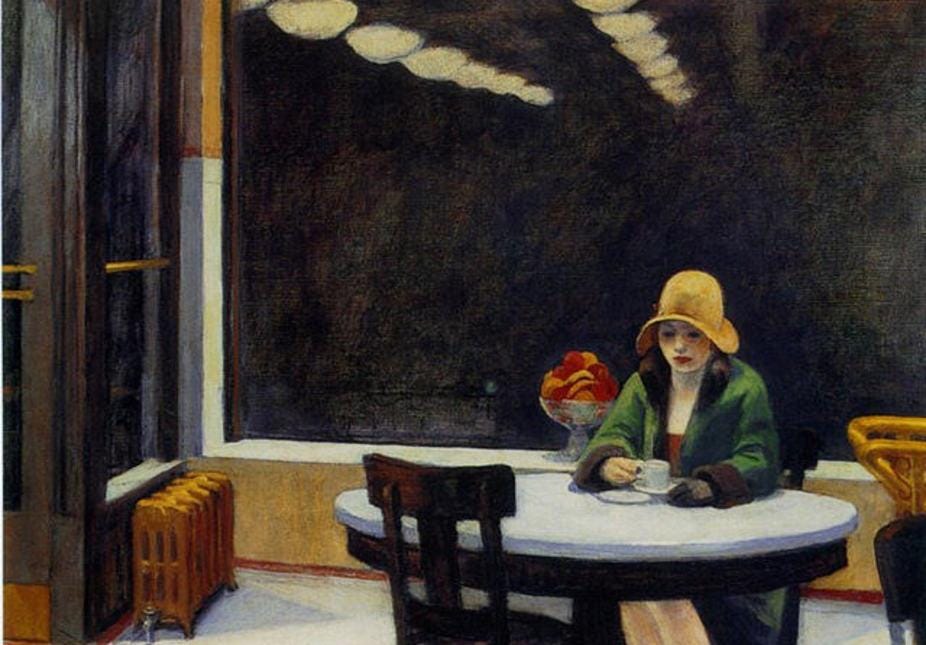
When you are on your own, no phone, no noise, just the hum of your own mind, how do you feel? Many people equate solitude with loneliness, as if being by ourselves means being adrift. Yet Hannah Arendt (1906–1975), the German-Jewish philosopher who reshaped our understanding of the human condition, saw solitude as fertile ground for self-discovery and moral clarity. Unlike isolation, which is often imposed and draining, solitude is a chosen and nourishing space for honest inner engagement. It’s where clarity emerges, and purpose begins to take form. This dialogue with oneself becomes a powerful force of meaning and moral strength.
The Two-in-One Dialogue
In The Life of the Mind,1 Arendt describes solitude as a “two-in-one” conversation: a lively internal exchange where we are both prosecutor and defendant in a trial of the self. Imagine one part of you asking, Why am I hesitating on this choice? while another digs deeper, unearthing fear, ambition, or unexamined motives. Rather than idle introspection, this disciplined process arranges scattered thoughts into a fragile yet coherent pattern. Loneliness, by contrast, is a barren disconnection from self and world, where no such dialogue occurs. Arendt writes:
“Thinking, existentially speaking, is a solitary but not a lonely business; solitude is that human situation in which I keep myself company. Loneliness comes about when I am alone without being able to split up into the two-in-one, without being able to keep myself company.”
Solitude demands courage. It asks us to face doubts and contradictions, to wrestle with uncomfortable truths. But this struggle is not just personal, it’s ethical. For Arendt, the two-in-one is a kind of rehearsal for judgement, a space to test our motives before they impact others. Drawing on Socrates’ claim that it is better to suffer wrong than to do it because wrongdoing fractures inner harmony,2 Arendt viewed solitude as a safeguard against moral failure. This inner struggle echoes the Danish philosopher Søren Kierkegaard, who saw solitude as a place to face your deepest responsibilities, free from the crowd’s sway.3 But where Kierkegaard emphasised inner truth, Arendt emphasised public responsibility: solitude equips us to act with integrity in a shared world. It may not bring certainty, but it fosters conscience.
The Banality of Evil and the Refusal to Think
This inner dialogue has human consequences. In Eichmann in Jerusalem, Arendt made a chilling observation: evil doesn’t always arrive with a snarl or ideology but sometimes with a shrug.4 Adolf Eichmann, the Nazi bureaucrat she studied, wasn’t a monster in the traditional sense. He wasn’t driven by hatred but by a shocking absence: a void where thinking should have been. He spoke in clichés, followed orders blindly, and never paused to question his role in the machinery of genocide. Arendt’s unsettling point was that evil can be banal: not trivial, but thoughtless. As she put it, “the sad truth is that most evil is done by people who never make up their minds to be good or evil.”
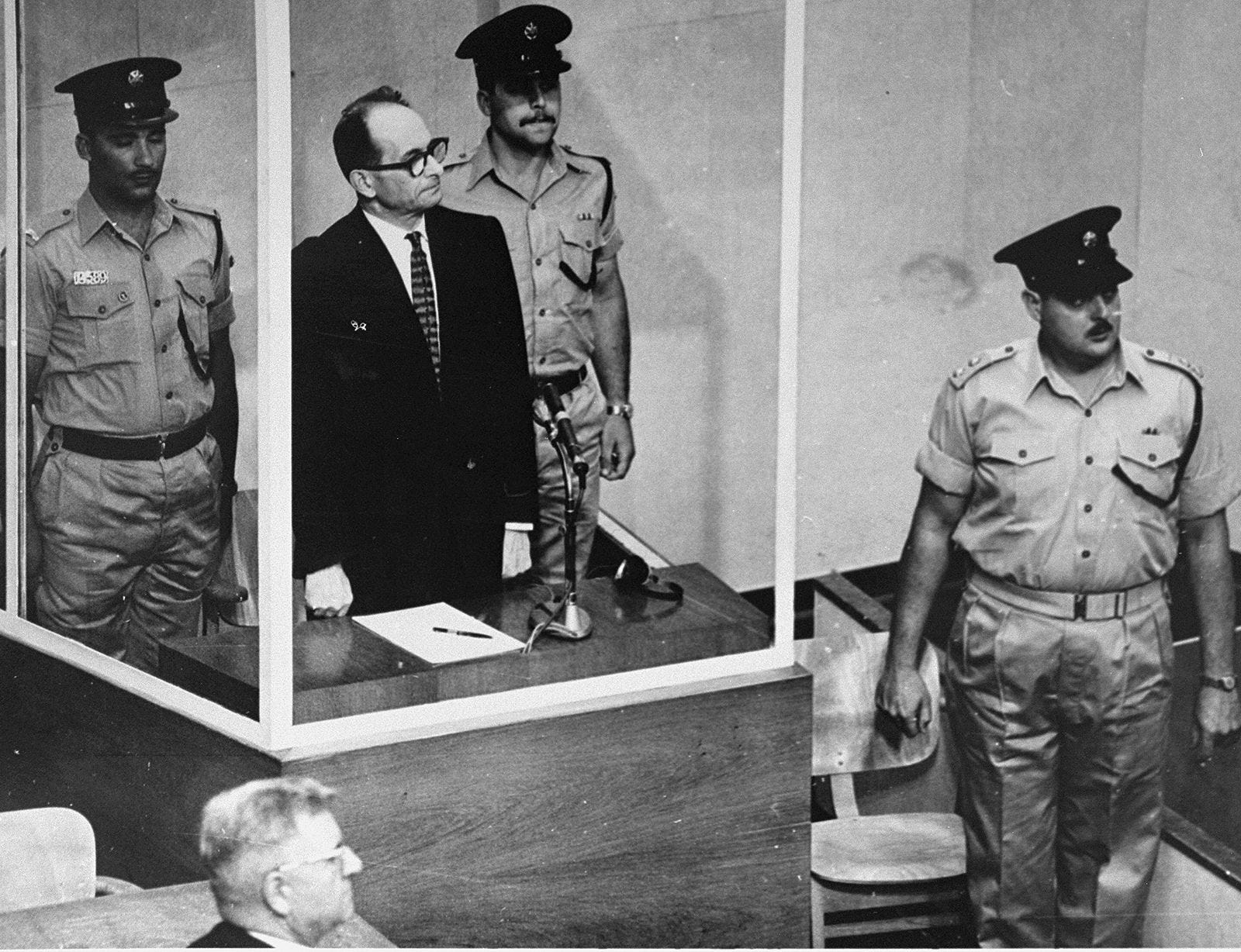
Eichmann had abandoned the two-in-one. No inner voice asked, Can I live with this? Instead, there was a cold efficiency, a mind outsourced to commands and ideological slogans. Solitude, had he practiced it, might have prompted resistance. Had Eichmann dared to question himself, he might have refused to be a cog in the machine. This thoughtlessness has implications beyond historical atrocities. Consider a modern employee in a corporate setting, pressured to cut corners on safety protocols to meet deadlines. Without pausing for reflection, they risk becoming an automaton, enabling harm through unexamined compliance. Arendt’s message is stark: solitude is the foundation of moral agency. It’s not just about knowing right from wrong, but staying connected to the inner voice that dares to ask the question. Without this, we risk drifting into actions that betray our own humanity.
Solitude in a Hyper-Connected Age
Arendt’s insights feel especially urgent in our modern digital world, where notifications clamour incessantly and algorithms shape opinions before they form. Social media echo chambers and 24/7 news channels, for instance, encourage groupthink, leaving little room for independent thought. It’s easy to mistake borrowed beliefs for your own, to let likes or trends dictate your values. Solitude offers a counterpoint: a space to tune out the noise and listen to what’s truly yours. What do you value, beyond the algorithm’s suggestions? What guides your actions, apart from the crowd’s chatter? Here, you learn to pause before acting, to think before following.
This isn’t escapism. Solitude anchors you firmly in reality, helping you act deliberately rather than reactively. It aligns with Michel Foucault’s concept of “care of the self,” where disciplined self-reflection crafts a life true to one’s principles.5 But Arendt’s focus on dialogue ties this inward work to public action. Some might argue that solitude is overly individualistic and less relevant in collectivist cultures that prioritise community. Yet Arendt counters this by showing that solitude equips us to bring a distinct, thoughtful voice to the collective, strengthening shared realities rather than withdrawing from them.
The Rhythm of Thinking
Solitude also reveals how your mind works. Every mind has its own cadence: some are quick and decisive; others are slow and meandering. Arendt saw this self-knowledge as vital: not just what you think, but how you think. Do you seek certainty or embrace doubt? Do you challenge your assumptions or let them slide? Martin Heidegger, Arendt’s teacher, viewed solitude as a confrontation with existence itself.6 But while Heidegger’s solitude dwells on life’s deeper mysteries, Arendt’s is more practical: knowing your mind’s rhythm equips you to act thoughtfully in the world, not just to ponder its depths.
This labour of thinking is rigorous, even painful. As Simone Weil noted, attention is a moral act, requiring discipline to set aside distractions.7 Arendt’s solitude, however, is less about quiet surrender and more about active debate, forging clarity for action. Facing contradictions or unresolved doubts can be unsettling, but this friction sparks growth. When you’ve wrestled with yourself unflinchingly, outside pressures like trends, dogma, or spin lose their grip. Solitude sharpens your ability to sense when something feels off, making it harder to follow ideas that betray your inner truth.
From Solitude to Action
Solitude is not the end goal, but a vital preparation. In The Human Condition, Arendt outlines the vita activa—the active life—which she divides into three fundmental types of human activity: labour (tasks necessary for survival, like eating and cleaning), work (creating lasting things that endure beyond immediate needs), and action (the realm of speech and deeds among others).8 For Arendt, action is the heart of the human condition and the highest form of activity: unpredictable and vibrant. It means stepping into the world with a voice, not a script.
Arendt distinguishes the vita activa from the vita contemplativa (the contemplative life), which philosophers have traditionally regarded as superior.9 She argues, however, that the vita activa is not inferior to contemplation; rather it offers its own unique and essential contributions to human existence, especially through action, which enables freedom, diversity, and the creation of meaning in the public realm.
Crucially, it is solitude that nurtures what Arendt called natality, the human capacity to begin anew, whether through a bold idea or a small, principled stand. Each act of inner dialogue helps us find the courage to bring something fresh into the world. This voice, honed in solitude, ensures public life remains vital. Without it, we risk falling into slogans or tribalism. With it, we act from judgement, not impulse or imitation, bringing thought to life through deeds that ripple outward.
Resisting Worldlessness
Arendt’s greatest concern was “worldlessness,” a state where people lose connection to a shared reality.10 Totalitarian regimes engineer this through propaganda, censorship, and terror, but democracies can slide into it through distraction or eroded truth. Social media’s filter bubbles, for example, can fracture shared understanding, pushing us toward polarised camps. Solitude resists this by grounding you in your own voice, preparing you for what Arendt called the space of appearance: the public stage where we reveal who we are through our words and deeds. Without solitude, we show up as echoes of others, not ourselves. With it, we bring a distinct perspective that strengthens the bonds of a shared world.
Solitude reconnects you to your inner compass, enabling honest engagement with reality. Without this, we act without understanding, speak without listening, follow without thinking. Those who cannot think alone cannot think with others; they don’t share the world; they drift through it. Far from being withdrawal, solitude is the discipline that makes a shared reality possible, helping us discern what’s real from what’s fabricated, what’s true from what’s convenient.

A Practice to Begin
To cultivate solitude, try this: set aside 15 minutes, no phone, no distractions. Grab a notebook and write one question brewing in your mind: perhaps about a career choice, a moral dilemma, or a belief you’re rethinking. Answer it with total honesty, then ask a follow-up question based on your response. For example, someone questioning a job change might write, Why am I hesitant to leave?, uncover fear of failure, then ask, What does failure mean to me? Keep going for a few rounds, not chasing answers but clarity. This exercise trains your mind to engage itself with curiosity.
Barriers like time or connectivity can make solitude feel impossible. Start small: turn off notifications during a commute or dedicate five minutes before bed to reflect. These pockets of solitude, however brief, build a habit of self-dialogue that grounds you over time.
The Privilege and Duty of Solitude
Arendt reframes solitude not as a burden but as a challenge: to face yourself, flaws and all, in a world that drowns out thought. It’s where you claim your voice, not to perfect it, but to own it. Her concept of “amor mundi,” or love of the world, captures why this matters: by wrestling with your thoughts, you clarify what you cherish—truth, justice, connection—and why it’s worth defending.11 Far from turning inward forever, solitude equips us to return to the world with a fiercer commitment to its care.
In an age of speed, division, and distraction, choosing solitude is resistance. It rejects pre-packaged answers and cultivates a voice that’s truly yours. A society’s vitality rests on the quiet courage of those who dare to think. So, in a world shouting for your attention, what might you hear if you listen to yourself?
If you can find it, Vita Activa: The Spirit of Hannah Arendt is a good documentary about Arendt’s life:

Arendt, H. (1978). The life of the mind (M. McCarthy, Ed.). Harcourt Brace Jovanovich.
Socrates’ maxim that it is better to suffer wrong than to do it comes from his dialogues, especially Plato’s Gorgias and Crito. Socrates argues that committing injustice harms the soul of the wrongdoer, creating inner disharmony and a troubled conscience, whereas suffering injustice leaves the soul intact. For Socrates, the worst harm is not external suffering but internal corruption—doing wrong “disturbs man’s inner harmony, which is, after all, the only criterion for the wrong.” He maintains that one should avoid wrongdoing at all costs, even in retaliation, because only by preserving inner harmony can one “go on living together” with oneself. This principle underpins his ethics and his refusal to escape his own death sentence, as he believed doing wrong would be a greater evil than suffering it.
Ojakangas, M. (2010). Arendt, Socrates, and the ethics of conscience. In Hannah Arendt: Practice, Thought and Judgement (Studies across Disciplines in the Humanities and Social Sciences, Vol. 8, pp. 67–85). Helsinki Collegium for Advanced Studies.
Søren Kierkegaard, a 19th-century Danish philosopher, emphasised the importance of solitude for authentic selfhood and ethical responsibility. He argued that genuine decisions about one’s life and values can only be made when an individual stands alone, apart from the pressures and opinions of “the crowd.” For Kierkegaard, solitude is not isolation but a necessary condition for confronting one’s deepest responsibilities and making meaningful choices based on personal conviction rather than social conformity. This idea is central to his works such as Fear and Trembling and The Crowd is Untruth.
In her book Eichmann in Jerusalem: A Report on the Banality of Evil (1963), Arendt analyses the trial of Adolf Eichmann, a key organiser of the Holocaust. Arendt famously introduced the concept of the “banality of evil” to describe Eichmann—not as a fanatical monster, but as an ordinary, thoughtless bureaucrat who committed atrocities by uncritically following orders and conforming to the system around him. Arendt argues that Eichmann’s greatest failing was his refusal to think for himself or reflect on the moral consequences of his actions, showing how evil can result from a lack of critical self-examination rather than from deep-seated hatred or wickedness. This challenges traditional views of moral responsibility by arguing that horrific acts can be committed by ordinary people who are neither inherently wicked nor driven by deep hatred. Instead, such evil arises from thoughtlessness, conformity, and an uncritical obedience to authority, rather than from deliberate, monstrous intent. Arendt does not excuse such behavior; she insists that the failure to think and judge morally is itself a grave moral failure. Her concept thus expands the scope of moral responsibility: it is not enough to avoid intentional wrongdoing—one must also resist the pressures of conformity and continually exercise independent moral judgment. This insight warns that anyone, under certain conditions, can become complicit in evil if they relinquish their capacity for critical thought and ethical reflection.
Michel Foucault’s concept of “care of the self” (epimeleia heautou) refers to an ancient ethical practice in which individuals actively cultivate themselves through ongoing self-reflection, self-discipline, and self-knowledge. For Foucault, this care is not merely about introspection or self-improvement for its own sake, but about shaping oneself as a moral subject capable of ethical action and truth-telling (parrhesia) within society. He emphasises that caring for oneself is foundational and must precede care for others, yet it is never isolated from social relationships: the process of self-formation is always connected to, and shaped by, interactions with others and the broader community. Foucault contrasts this ancient practice with modern ethics, arguing that “care of the self” is a lifelong, socially embedded activity that enables individuals to exercise freedom, resist conformity, and develop the capacity for critical, autonomous judgment.
Posselt, G. (2021). Self-Care and Truth-Telling: Rethinking Care with Foucault. Le Foucaldien, 7(1), 1–15. DOI: 10.16995/lefou.107
As an 18-year-old student at the University of Marburg, Arendt entered into a romantic affair with Heidegger, who was then her 35-year-old, married philosophy professor. Their relationship began in the mid-1920s and, despite its early end as a romance, evolved into a lifelong—if sometimes strained—friendship and intellectual exchange. Heidegger’s philosophical influence on Arendt was profound, particularly his ideas on “being-in-the-world” and existential inquiry, which shaped her early thinking. However, their relationship was complicated by Heidegger’s later affiliation with the Nazi Party, which Arendt, herself Jewish and later a refugee from Nazi Germany, found deeply troubling. Despite this, Arendt maintained contact with Heidegger after World War II and even played a role in his postwar intellectual rehabilitation. Their correspondence, published as Letters: 1925–1975, reveals a complex bond marked by affection, philosophical dialogue, and the enduring tension between personal loyalty and political conviction.
Simone Weil, a French philosopher and mystic, argued that genuine attention is not just a mental focus but a moral act. For Weil, to truly pay attention—to a person, an idea, or a problem—requires setting aside one’s own distractions, desires, and ego in order to be fully present and receptive. This disciplined attention is, for Weil, the foundation of compassion, understanding, and justice, because it allows us to see others and the world as they truly are, rather than through the filter of our own self-interest. In her essay “Reflections on the Right Use of School Studies with a View to the Love of God,” she writes that attention is “the rarest and purest form of generosity.”
In The Human Condition, Arendt distinguishes three fundamental types of human activity: labour, which refers to tasks necessary for biological survival and daily maintenance; work, which involves creating lasting objects, structures, or institutions that endure beyond immediate needs; and action, which is the uniquely human capacity to initiate new events, express freedom, and interact with others in the public sphere. Arendt argues that while labour and work are essential, it is through action—speech and deeds among others—that individuals reveal their distinct identities and contribute to the shared world, making political life and freedom possible.
Arendt, H. (1958). The human condition. University of Chicago Press.
In antiquity, Plato and Aristotle both emphasised the contemplative life as the highest human calling, with Aristotle arguing in the Nicomachean Ethics that contemplation (theoria) is the most divine and fulfilling activity. In the Christian tradition, Church Fathers such as Augustine and especially Gregory the Great further developed this hierarchy, viewing the contemplative life as a higher stage of spiritual development compared to the active life. This view was later systematised by Thomas Aquinas, who explicitly stated in the Summa Theologiae that “the contemplative life is simply more excellent than the active.”
Active Life and Contemplative Life: A Study of theConcepts from Plato to the Present (Article by Sister Mary Elizabeth Mason).
Arendt’s concept of “worldlessness” refers to the loss or breakdown of a shared, common world—a public space where people can appear to one another, act, and engage meaningfully. For Arendt, worldlessness means being cut off from this collective reality, leading to alienation, loneliness, and a diminished sense of reality itself. She saw worldlessness as a hallmark of modern crises and totalitarian regimes, which erode the public sphere and isolate individuals, making genuine political life and plurality impossible
Arendt’s concept of amor mundi, or “love of the world,” is a central theme in her later philosophy. Unlike romantic or possessive love, amor mundi is an attitude of attentive, caring engagement with the world as it is, including its plurality, imperfections, and unpredictability. For Arendt, loving the world means neither uncritical acceptance nor cynical rejection, but facing reality with openness and responsibility—seeking to understand, judge, and care for the shared world that forms the stage for human action and plurality. She contrasts this with more inward or transcendent forms of love, such as Augustine’s “love-as-craving” or “love-as-memory,” which can draw the lover away from the world and others. Instead, amor mundi calls for embracing the world in all its diversity and complexity, and for taking responsibility to preserve and care for the political and ethical spaces where people appear to one another as unique individuals. Arendt saw this love as both a privilege and a duty, necessary for sustaining the conditions of freedom, plurality, and meaningful public life.
I really enjoyed reading this article and will discuss it with others. One question I wonder about relates to the following: Adam Zeman researched a phenomenon called aphantasia, the inability to imagine with the mind’s eye. There are less well-known auditory equivalents, anauralia, and particularly, anendophasia which is the lack of an inner dialogue. I’m not an expert in these but I became aware of it when I found out that this was what my daughter experienced. She only has sounds ‘in her head’ when she put them there with headphones. As a sports coach, you may find it interesting to find out how individuals think, whether via an inner dialogue as discussed in your article, or via alternative means. I wonder if the lack of an inner dialogue could account for some behaviours that are difficult to understand.