



Some 2500 years ago, the first Greek philosophers began asking questions that went beyond mere curiosity about nature. They wondered not only what the world was made of but also how we should live within it. For these thinkers, separating the study of the physical world from ethics was impossible; to understand the cosmos meant understanding one’s own place within it.
Grouped loosely and retrospectively as the Ionian School, these thinkers worked in the bustling port cities of western Asia Minor (now modern Turkey) around the 6th century BCE. They turned away from mythic stories of capricious gods to explore the world using reason and observation. Thales, often called the first philosopher, proposed water as the primary element, Anaximenes favoured air, Pythagoras emphasised mathematical principles, and Democritus later introduced atoms as basic building blocks. Aristotle would later call these thinkers “physiologoi”—“those who talk about nature”—and recognised their lasting impact on science and our understanding of the world. One thinker stood out, however, who proposed a radical vision of life and the cosmos with change as its first principle.
The Weeping Philosopher
Born around 535 BCE in Ephesus to a wealthy aristocratic family, Heraclitus was unlike others of his time. He cared little for privilege, power, or popularity, and was famously misanthropic. Ancient biographers depict him as seeing most humans as ignorant, shallow, and obsessed with trivial pleasures like food and sex, blind to the deeper truths of life. Disillusioned, he withdrew from civic life, earning the nickname “The Weeping Philosopher.”
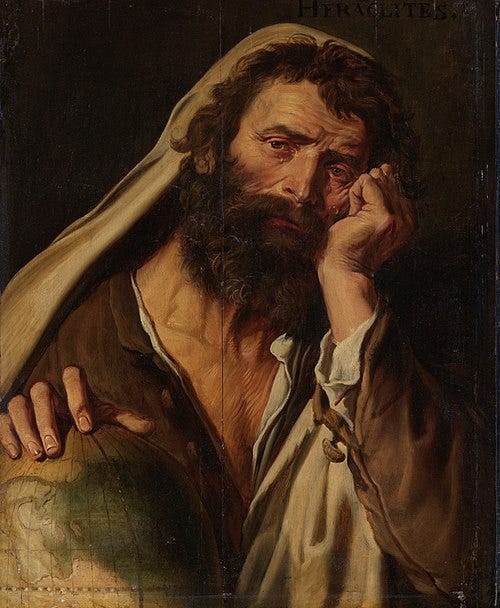
Rather than giving public lectures or writing systematic treatises, Heraclitus composed On Nature, a short book of terse, poetic fragments. Like a trail of cryptic clues, these fragments forced readers to wrestle with meaning themselves rather than receiving easy answers, earning him another moniker: “The Riddler.” He is said to have left his book in the Temple of Artemis (which later burned down after an arson attack). Few fragments remain, but they convey a bold vision that resonates to this day.1
Everything Flows
While others looked for unchanging stability behind appearances, Heraclitus insisted on endless flux. One of his best known fragments states: “On those who step into the same rivers, different and again different waters flow.” He used the image of a river to show that each time someone steps in, new water is flowing past, so it’s never exactly the same river as before. The person stepping in is also changing from moment to moment. This means both the river and the person are always in flux. A modern parallel might be our Twitter or LinkedIn feeds, where the same “timeline” is never the same from one instant to the next. The famous tagline “panta rhei”—“everything flows”—is a later paraphrase, but it captures the gist of multiple fragments.
Heraclitus’ master symbol was fire, not as a literal element but as a metaphor for constant transformation. The universe, he wrote, “was not made by gods or men, but always was, is, and will be an ever-living fire.” Like fire, change consumes and renews; it is an essential, creative pattern of existence. By understanding this, we’re invited to embrace change rather than resist it, finding peace in the ever-moving flow of life.

Centuries later, the Scottish philosopher David Hume echoed this insight, seeing the self not as a fixed core but a “bundle” of perceptions in perpetual flux. Both he and Heraclitus remind us that our identity is an unfolding process, not the illusion of a static “I” to which we often cling.
The Unity of Opposites
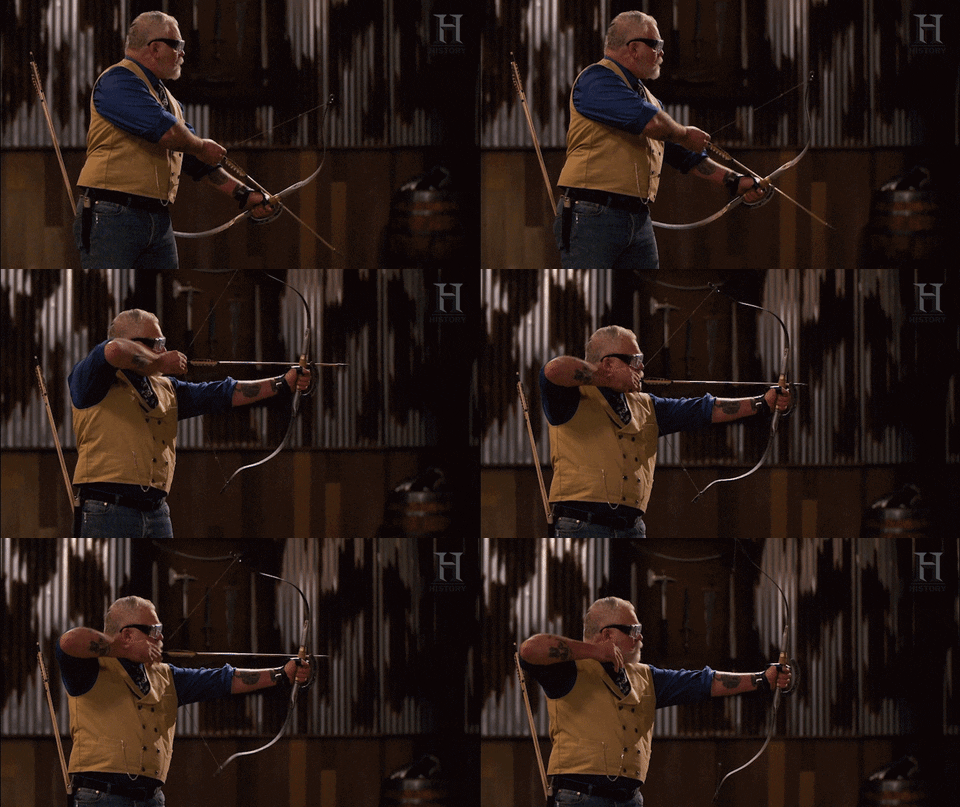
If all things change, then what holds the world together? While thinkers like Parmenides and Plato imagined a harmonious, stable cosmos of fixed “Being,” Heraclitus saw harmony born of tension and opposition. Stability, for him, was merely a patterned change of becoming: “They do not understand how a thing agrees at variance with itself: a back-turning harmony, like that of the bow and the lyre.” Just as pulling the bowstring back while pushing the bow forward creates the tension that energises the arrow, things only exist and function because of the push and pull between opposites: day and night, hunger and satiety, illness and health, youth and old age, life and death. The anxiety you feel before a big presentation is the same energy that fuels a great performance. Other fragments drive the point home: “Cold warms; warm cools. Wet dries; dry wets.” “The way up and the way down are one and the same.”
There’s a parallel here with Rudolf Steiner’s insight into the need to balance the dynamic tension between Lucifer and Ahriman—forces whose tug of war runs through us internally and shapes our orientation to the world. As I wrote recently, Steiner described how “Lucifer and Ahriman must be regarded as two scales of a balance, and it is we who must hold the beam in equipoise.”2 This struggle is a living equilibrium, a dynamic middle path where contrary strengths generate individual and communal growth. True balance is therefore never static, but always negotiated and evolving through inner and outer conflict.
In the Heraclitean worldview, nothing exists permanently or independently; everything belongs to a holistic, interconnected flow. Yet perspective is still critical: sea water is wholesome for fish, but drinking it is fatal for humans. What appears contradictory from one vantage point resolves into a coherent pattern from another. The lesson here is not mindless relativism but a deeper unity in which contraries generate each other and the whole.
Strife
Heraclitus named this generative tension at work in the universe “war” or “strife.” He wasn’t glorifying violence but recognising strife as a fundamental cosmic structure that underpins existence: “We must know that war is common to all, and all things come into being through strife.” Far from chaos, this conflict is what produces order, which is Heraclitus’ very definition of justice. As he said,“War is father of all and king of all; some he made gods, some men; some slaves, some free.”
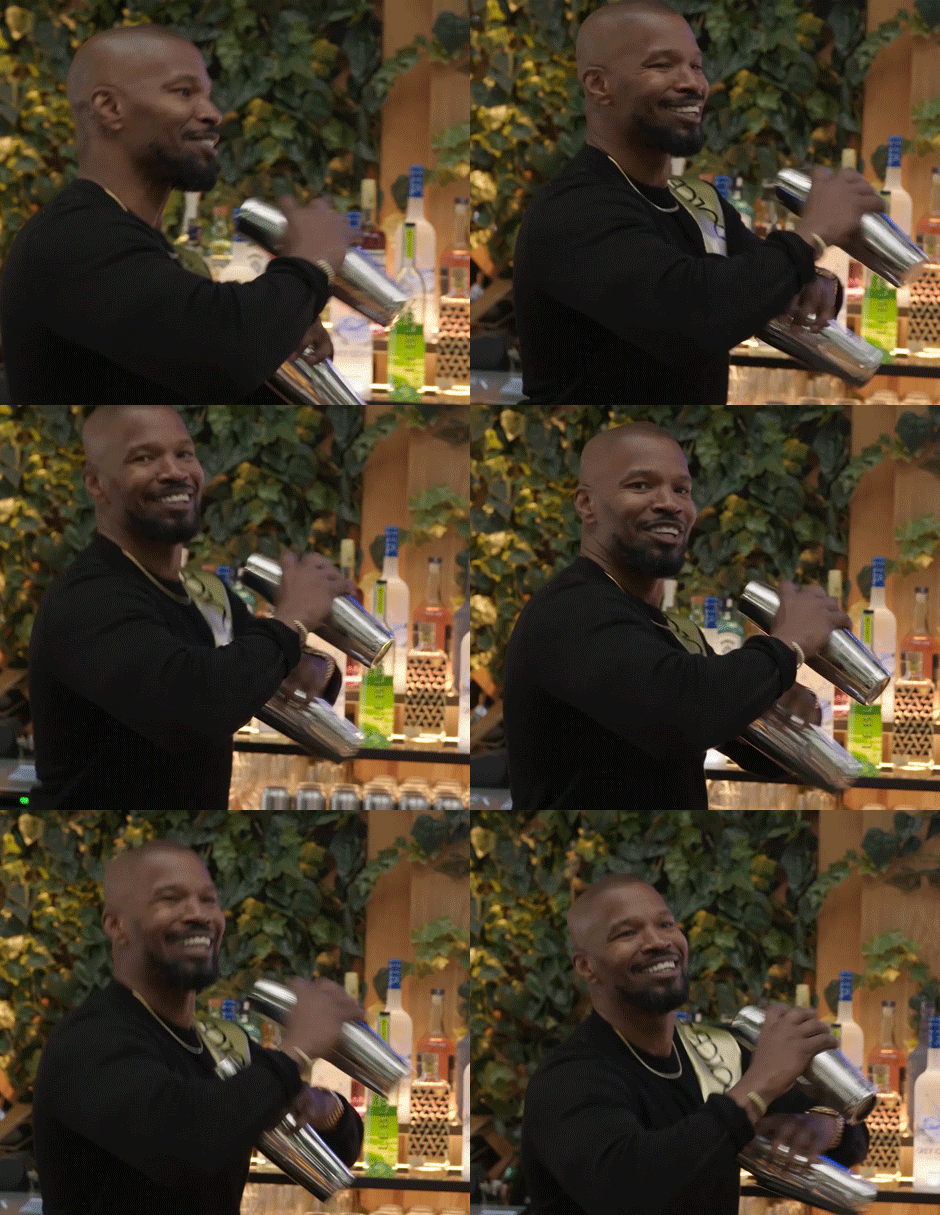
Strife is the life-giving tension that holds opposites in balance, driving the perpetual cycle of creation and destruction that sustains the cosmos. Without opposition and conflict, there would be no differentiation, no movement, and no life. To illustrate, Heraclitus used the metaphor of kykeȏn, an ancient mixed drink: “Even the kykeȏn separates if it is not stirred.” Similar to how a vinaigrette separates when left still, the point is that agitation keeps things integrated and alive. He would likely scoff at our modern obsession with creating “safe spaces” from opposing views; for him, the tension is where life happens.
When I first read Heraclitus, his ideas felt a bit disjointed and pessimistic. A weeping philosopher who celebrated strife? FFS! It wasn’t until I started looking at his world through Nietzsche’s eyes that the fragments began to click into a beautiful, dynamic whole. Nietzsche heard in Heraclitus not pessimism but courage and a profound affirmation of life: a sacred “Yes” to the measured struggle that makes order. In his Philosophy in the Tragic Age of the Greeks,3 Nietzsche marvels:
“It is a wonderful idea, welling up from the purest strings of Hellenism… that strife embodies the everlasting sovereignty of strict justice, bound to everlasting laws.”
He adds:
“According to Heraclitus honey is at the same time sweet and bitter, and the world itself an amphora whose contents constantly need stirring up…war is not at an end; the wrestling continues to all eternity. Everything happens according to this struggle, and this very struggle manifests eternal justice.”
Our task, then, is to seek out and embrace this tension, rather than trying to relieve or escape it.
The Logos
Beneath the turbulence of constant change, Heraclitus saw a deeper order: an ever-present rational principle he called the Logos. In Greek, “logos” means word, reason, or account, but for Heraclitus, it was far more. He saw it as the hidden logic guiding the universe’s flow into a coherent, harmonious whole. As he wrote, “The unseen design of things is more harmonious than the seen.” A loose analogy can be drawn to the “Tao” in Taoism, whereby the Logos is not a doctrine so much as the way the world goes, often invisible but profoundly real.4
Yet, most people fail to perceive this universal law. “We should let ourselves be guided by what is common to all,” he urged, but our egocentrism and stubbornness blind us to it. We live as if we each have a “private intelligence” of our own, thinking we know better and becoming disconnected from the greater cosmic order that connects all things.
To live wisely, Heraclitus counsels, is to transcend narrow ego by attuning ourselves to the Logos, aligning our lives with the deeper current of reality’s unifying flow. To hear him is less important than to hear the Logos itself: “He who hears not me but the Logos will say: all is one.” This means trusting the “unseen design,” even when the visible parts seem chaotic, finding faith not in a fixed plan, but in the process itself.

Living with Perspective
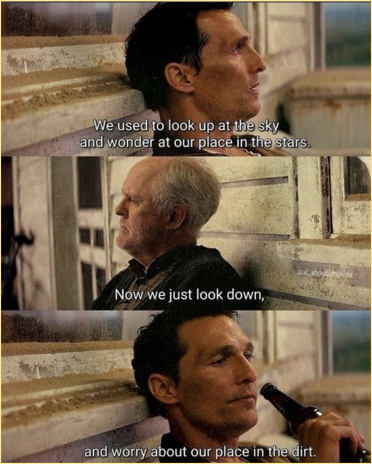
The Greeks studied nature to ask a fundamental question: How should I live? Heraclitus urged living in harmony with nature, avoiding greed, drunkenness, and shallow pleasures. “Eaters of food, sleepers toward death,” he grumbled. He believed anyone could kindle their “inner fire” through self-control and reflection on life’s bigger patterns. The French philosopher Pierre Hadot revived this as “cosmic consciousness,” a practice of seeing ourselves as tiny eddies in a vast river, accepting pain and trouble as part of a greater order.5 Contemplation was ancient therapy, teaching perspective and calming anxieties with awe.
Modern psychology parallels this in techniques like “cognitive distancing,” and astronauts describe an “overview effect” when seeing Earth from space. Apollo 14’s Edgar Mitchell said:
“You develop an instant global consciousness, a people orientation, an intense dissatisfaction with the state of the world, and a compulsion to do something about it... From out there on the moon, international politics look so petty. You want to grab a politician by the scruff of the neck and drag him a quarter of a million miles out and say, ‘Look at that, you son of a bitch.’”
Mitchell’s cosmic awakening mirrors Spiral Dynamics’ “Turquoise” stage of unity, fluidity, and deep interconnectedness.6 Heraclitus stood here thousands of years earlier: when you release your fixation on a rigid identity, the hidden harmony behind apparent chaos comes into view. Seeing life as this flowing process humbles us, but it can also set us free.
From Stoicism to William Blake and the Philosophers of Becoming
Though Heraclitus puzzled many of his contemporaries, his ideas inspired later traditions. The Stoics, emerging in the 3rd century BCE, embraced his vision of a world made of living fire and shaped by the Logos. The Stoic emperor Marcus Aurelius later wrote, “All things are interwoven with one another, a sacred bond unites them.” For the Stoics, the Logos was an active, creative reason organising the cosmos through cycles of fiery destruction and renewal. Early Christians, influenced in part by Stoic ideas, took this further, identifying Christ as the Logos—the divine Word through whom all things were made.
Centuries later, the visionary English poet and artist William Blake echoed Heraclitus’s embrace of paradox. Blake’s doctrine of “contraries” as necessary creative tensions resonates deeply with Heraclitus’s “strife” as the basis of cosmic order.7 Both men rejected static being for a dynamic process where opposites reconcile in living wholeness.
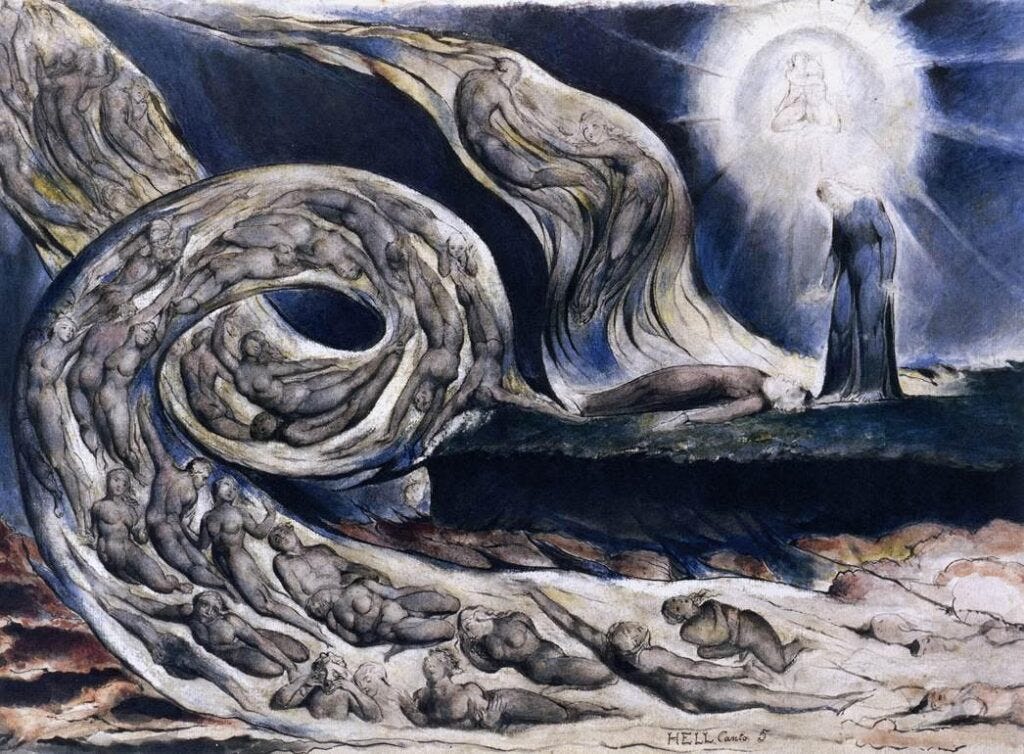
Heraclitus’ ideas on change and opposites also influenced later thinkers who developed philosophies of “becoming.” Hegel developed a dialectical logic in which concepts move by self-contradiction, echoing Heraclitean flux. And Nietzsche expanded these ideas in his doctrines of “eternal recurrence” and the “Will to Power,” affirming struggle as creative becoming. He admired Heraclitus as a solitary and original truth-finder who was “hewn from a single stone,” declaring:
“In Heraclitus’ proximity I feel warmer and better than anywhere else… the affirmation of passing away and destroying… saying Yes to opposition and war… becoming… all this relates closely to me.”
Henri Bergson’s philosophy of “durée” and creative evolution emphasised time’s fluidity and creativity, his “élan vital,” or vital impetus, resonates with Heraclitus’ ever-flowing fire.8 Alfred North Whitehead, the founder of process philosophy, drew on Heraclitus to argue reality consists of an ongoing flow of events rather than static substances.9 Similarly, existentialists like Heidegger and Sartre emphasised “being-in-time” and the tension of opposites within human existence, their focus on authentic living reflecting Heraclitus’ spirit.
In the late 20th and early 21st centuries, biologist-philosopher Ray Peat articulated a bioenergetic worldview close to Heraclitus’ vision of life as an “everliving fire.” For Peat, health and vitality depends less on fixed mechanisms than on the body’s capacity to generate and circulate energy at the cellular level, a living fire within us. Metabolism, for him, was not mere fuel consumption but the essence of life’s flexibility and creative potential.10
Extending this to language and culture, Peat warned against reducing reality to digital abstractions and static categories. Like Heraclitus, he urged fidelity to life’s fluid, dialectical movement, inviting us to sense the warmth, intelligence, and possibility in reality’s flow, and to live creatively within it. Contemporary process philosophers and some panpsychists also extend the sense that mind and order pervade nature—an echo, if not an identity, with the Heraclitean Logos.

Echoes in Modern Science
Heraclitus’ vision resonates with uncanny precision in modern science. Quantum mechanics reveals a world of indeterminacy and constant interaction, not fixed particles. Complexity theory studies how new order emerges dynamically in systems far from equilibrium, echoing Heraclitus’ fire of creation and destruction. Modern cosmology, with galaxies forming and fading, black holes consuming and birthing stars, also mirrors the ever-living fire. As Professor Bob Coecke, chief scientist at Quantinuum, suggests, science might have evolved radically differently if it had begun with Heraclitus’ process-oriented view rather than Democritus’ world of static atoms.11
Living Heraclitus’ Wisdom
Heraclitus pictured the world as a living fire, ever-changing and renewing. Strife and harmony, conflict and unity, are partners in this deep logic of change. To listen for the Logos in the rush of things is still, after all these centuries, the beginning of wisdom. Here are a few ways we might stop fighting the current and instead learn to navigate it:
Embrace the Flow: Accept that change is the only constant and inevitable. Instead of clinging to fixed plans or identities, learn to adapt, improvise, and move with life’s transformations.
Find Harmony in Tension: Recognise that adversity, conflict, and opposition are not failures to be avoided but necessary, creative forces that generate growth, strength, balance.
Listen for the Logos: Practice a deeper awareness, through reflection, mindfulness, or simply paying attention to sense the hidden order beneath the surface of apparent chaos. Trust the process.
Nurture Your Inner Fire: Have a Coke, fire up your metabolism, and follow your curiosity, avoiding habits and stressors that dull consciousness.
Adopt a Cosmic Perspective: Zoom out. See yourself and your struggles as part of a vast, interconnected whole. This cultivates humility, compassion, and wise action.
To live by these principles is to navigate life’s constant flux not with anxiety, but with wisdom, balance, and purpose.
Read the remaining fragments here. Scholars estimate there are about 130 fragments attributed to Heraclitus in total. However, more than half of these fragments have been challenged or debated concerning their authenticity over time, leaving roughly 60 widely accepted as genuinely from Heraclitus by classical scholars. The exact number varies depending on the edition and criteria of authenticity.
Rudolf Steiner and the Threefold Forces in Our Time (Substack post)
Philosophy in the Tragic Age of the Greeks by Friedrich Nietzsche (1873) https://archive.org/details/nietzsche-philosophy-tragic-age-greeks
Lao Tzu and the Path of Yielding Wisdom (Substack post)
Pierre Hadot (1922-2010) used “cosmic consciousness” to describe the philosophical perspective of seeing oneself as part of the larger whole of the cosmos, rather than from a limited, individual point of view. He traced this notion to the practice of “lived physics” in ancient philosophy, especially in Stoicism, where attuning oneself to the order of nature helped cultivate both universality of perspective and inner peace. For Hadot, this mode of “cosmic consciousness” means becoming aware that one is “a part of the Whole,” and learning to accept the necessary unfolding of nature with which we identify.
Clare Graves and the Evolution of Human Consciousness (Substack post)
William Blake and the Sacred Power of Imagination (Substack post)
Henri Bergson and the Flow of Time (Substack post)
Alfred North Whitehead and the Dance of Life (Substack post)
Ray Peat and the Art of Becoming (Substack post)
This shift from fixed entities to processes aligns more closely with modern views in quantum mechanics and complexity theory, where reality is better understood as evolving events and interrelationships rather than static particles. Coecke proposes that grounding scientific inquiry in Heraclitus’ process-oriented worldview could have led to alternative conceptual foundations and potentially new scientific paradigms.
A good read on this: Could the ancient Greeks have invented quantum theory? (Article in New Scientist)
I want to commend you on another outstanding essay. My only question is: at what point do you plan to spend more time exploring Zoroastrian philosophy and the role of the Magi? In many ways, Western thought has a profound blind spot (with the exception of a few philosophers) in overlooking the ideas of fire, harmony, order, and the balance of opposites.
You might enjoy delving into Mazda Yasna—the true name of Zoroastrianism—which offers a deeply nuanced view of these principles. I’d be happy to assist in any way toward this goal.
Thank you John for taking this into account. I would welcome to send you a book on Mazda Yasna, which I think will help you get a perspective on this philosophy and its impact.