



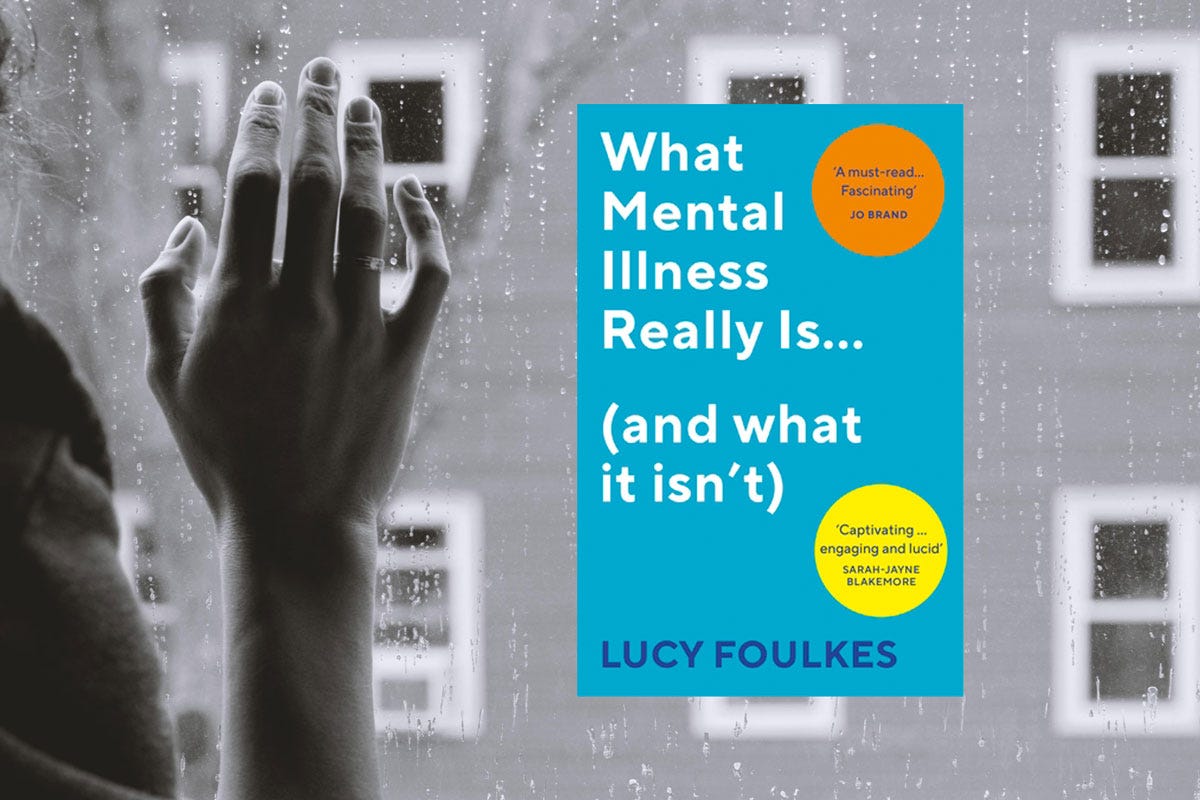
Mental health awareness is everywhere: from TikTok hashtags and corporate wellness campaigns to influencer merchandise and subtle cues on fast-food menus. Yet, as psychologist Lucy Foulkes highlights in her 2022 book What Mental Illness Really Is… (and What It Isn’t), this heightened attention often causes us to mislabel ordinary feelings like sadness or stress as medical disorders.1 This mislabelling can create a “looping effect,” where people internalise these labels, intensifying their distress and fuelling a culture narrowly focussed on therapy and quick fixes, rather than genuine understanding. By combining Foulkes’ insights with existential philosophy, which views suffering as an inherent part of human life, we can rethink what it truly means to live well.
Pathologising the Human Condition
Foulkes argues that the contemporary mental health movement, turbocharged by social media and well-meaning campaigns, often blurs the line between everyday struggles and clinical illness. For instance, a teenager nervous about an exam or presentation might label their feelings as “anxiety” after scrolling through Instagram, while a challenging week can become “depression” in casual conversation. This shift in language, she warns, can dilute our understanding of severe mental illnesses such as schizophrenia or bipolar disorder, potentially trivialising the suffering they involve and stretching already limited support resources. One 2023 study found that over 83% of mental health advice on TikTok is misleading or incomplete, while clinicians note a growing number of young people arriving with self-diagnoses that may obscure more complex issues and solidify fragile identities.2
Foulkes doesn’t argue that increased awareness is inherently negative. It has made seeking help easier for those genuinely in need and reduced much of the social stigma that has long surrounded mental illness. Her main concern is the loss of nuance: when all distress is framed as illness, it can erode resilience and reduce our understanding of what it means to be human.
Although Foulkes doesn’t draw directly from existential philosophy, I think bringing it into the conversation helps deepen her critique. Thinkers like Jean-Paul Sartre and Albert Camus viewed discomfort, angst, and suffering as intrinsic to being human. For Sartre, anxiety was the price of freedom and choice;3 for Camus, suffering revealed the tension between our desire for meaning and the universe’s cold indifference.4 From this perspective, overdiagnosing or overlabelling ordinary struggles can dodge the essential questions that these feelings raise about our values, choices, and capacity for growth.
When Labels Shape Reality
Foulkes describes the “looping effect”: when mental health labels are too freely or inaccurately applied, they shape how people see themselves and behave. For example, after watching a TikTok about “high-functioning anxiety” (a non-clinical term), a teenager may begin to identify with this label, start avoiding challenges, and become more anxious, amplified by social media algorithms that repeat this narrative.

There is a parallel here with existential philosophy: Martin Heidegger’s concept of “das Man” suggests that people fall into inauthentic ways of living by conforming to societal expectations and the norms of “the they,” rather than forging an individual path.5 Similarly, Søren Kierkegaard warned that failing to genuinely engage with anxiety and despair can mean missing out on developing a true sense of self.6
Thus, while Foulkes’ critique is largely psychological and social in focus, existential thinkers underline the risks of hastily adopting medical labels. Rather than fostering reflection, the looping effect can lock people into identities imposed by popular culture, rather than discovered through personal exploration.
Therapy Culture and Outsourcing the Self
A further theme in Foulkes’ book is the critique of what has become “therapy culture.” In this climate, any distress is often seen as requiring professional intervention. UK school programmes now encourage children to label, monitor, and discuss a wide range of emotions as part of their social and emotional education.7 While sometimes helpful, Foulkes cautions that this mindset can backfire, teaching young people to interpret ordinary sadness or worry as problems to be fixed, making being human itself seem like a condition in need of treatment.
Many existential philosophers argued that meaning and growth arise from confronting life’s challenges head-on, not outsourcing them to experts. For example, Simone de Beauvoir described true authenticity as requiring engagement with life’s ambiguity,8 while Friedrich Nietzsche’s notion of the “Übermensch” valorised confronting hardship as a route to “self-overcoming” and personal transformation.9 In contrast, Nietzsche also warned of the risk of becoming the complacent, comfort-seeking “last man,” an archetype for a society obsessed with avoiding pain and maximising safety.10 Suffering, Nietzsche writes in Beyond Good and Evil (1886), helps humanity grow and change:
“You want, if possible (and no ‘if possible’ is crazier), to abolish suffering. And us? – it looks as though we would prefer it to be heightened and made even worse than it has ever been! Well-being as you understand it – that is no goal; it looks to us like an end! – a condition that immediately renders people ridiculous and despicable – that makes their decline into something desirable! The discipline of suffering, of great suffering – don’t you know that this discipline has been the sole cause of every enhancement in humanity so far?”
Still, therapy as a whole is not the problem. Approaches such as Irvin Yalom’s existential psychotherapy focus on facing life’s ultimate concerns—death, freedom, isolation, and meaninglessness—to foster authentic self-understanding.11 Viktor Frankl’s logotherapy and Jungian analysis also encourage embracing discomfort as a source of meaning, urging clients to reflect on suffering, rather than simply removing it. Foulkes is not anti-treatment; rather she calls for greater clarity and care in distinguishing ordinary life challenges from real clinical needs.

Cultural Context Matters
Western therapy culture often emphasises individual diagnoses and a brain-centred, medical model. Many cultures, however, address distress through shared rituals, storytelling, dance, and communal healing. For example, African traditions such as Ubuntu (“I am because we are”) see well-being as fundamentally social.12 The syntropist Ulisse Di Corpo notes that many Eastern philosophies emphasise the heart as the seat of wisdom, rather than the mind’s need for control and self-optimisation.13
Contemporary heart-brain coherence research explores how the heart and brain communicate bidirectionally, with a focus on the heart’s rhythms influencing emotional regulation, cognitive function, and social connectedness.14 This scientific perspective supports traditional views that emphasise the heart as a source of wisdom and balance, complementing Eastern philosophies and communal healing practices. Nietzsche insightfully observed that “we are in the phase of modesty of consciousness,” and that the right place to begin is “the body, the gesture, the diet, physiology; the rest follows from that.”15
Together, these perspectives suggest we need more diverse tools to address hardship, viewing discomfort as a catalyst for growth rather than a sign of failure. A society fixated on erasing pain risks losing vital wisdom, whereas one that embraces suffering as a teacher may discover greater syntropic alignment and connection.
Wellness Sells
In recent years, the “wellness industry,” from mindfulness apps to emotional wellness branding, has commodified fragility and distress, selling fast and often superficial, fixes. Foulkes notes that despite alarmist headlines about a youth mental health crisis, many adolescents remain highly resilient, even as commercial interests exploit the narrative of fragility for market gain.16 Here, philosophical critiques are particularly resonant: Nietzsche and contemporary thinkers like Byung-Chul Han (author of The Burnout Society) argue that the relentless drive to self-optimise and avoid pain not only exhaust us, but can also alienate us from ourselves.
Echoing this skepticism, James de Llis contends that therapy culture, much like the booming self-help industry, is an “oversold, overpromised, and oversocialised sacred cow, that promises so much, and delivers so little.”17 Indeed, a recent survey of over 5000 adults found that 35% of people in the UK have had counselling at some point in their lives,18 while about 30% of American adults are said to have seen a therapist since 2020.19
Reclaiming Authentic Well-Being
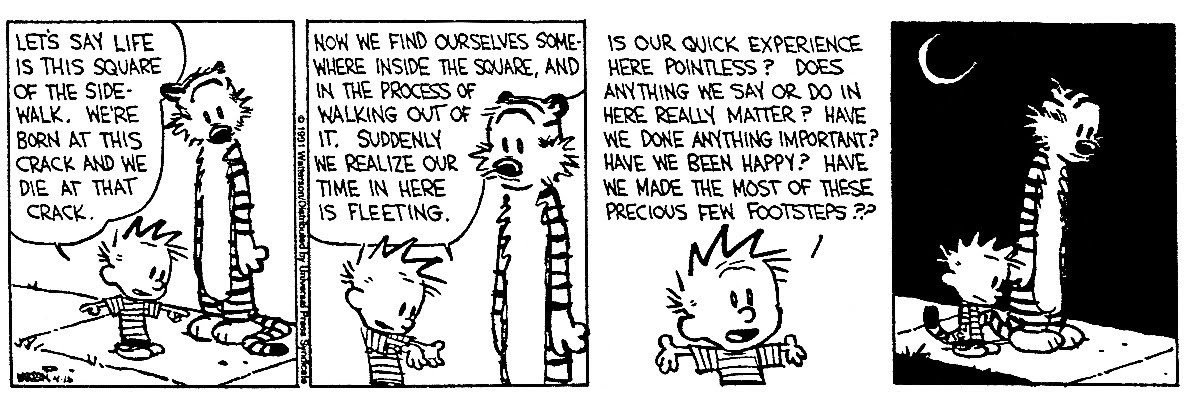
So, what does it mean to live well? Foulkes, existential philosophers, and cultural wisdom traditions converge on a key idea: well-being isn’t a comfortable, pain-free state, but an honest engagement with life’s difficulties and ambiguities. Sadness, anxiety, disappointment, and despair are often natural parts of life, not problems to “cure.” Camus’ Sisyphus finds happiness in his eternal task by accepting it.20 Heidegger’s idea of “being-toward-death” frames our mortality as a call to live deliberately.21 Kierkegaard’s “leap of faith”22 and Sartre’s claim that we are “condemned to be free” remind us that uncertainty, and the need to make choices, are inescapable.23 True well-being, existentially speaking, flows from finding something worth suffering for.
Of course, it would be remiss of me not to acknowledge that economic pressures, social fragmentation, and structural inequities also cause distress—realities that personal meaning-making cannot always fix. Byung-Chul Han critiques neoliberal pressures for self-optimisation, which intensify therapy culture and misplaced self-blame.24 It’s crucial to recognise when suffering is rooted in social forces, not individual weakness, for a truly compassionate and realistic vision of mental health.
Charting a Healthier Path Forward
Lucy Foulkes’ critique of overdiagnosis, looping effects, and therapy culture clarifies how well-intentioned mental health discussions can oversimplify what it means to be human. By integrating existential philosophy and social context, we arrive at a more nuanced view: well-being isn’t simply the absence of pain, but an honest engagement with life’s difficulties, uncertainties, and possibilities. This approach respects suffering as a potential teacher, promotes reflection, and encourages a deeper, less commodified quest to live well.
As we navigate a world that markets easy solutions and quick labels, remembering this deeper wisdom isn’t always easy. Yet perhaps, by honouring both the struggles and strengths that define us, we can find a more compassionate, authentic, and enduring approach to mental health. For ourselves and each other.
In this talk, Lucy Foulkes considers what’s going right in the public conversation on mental health, what’s going wrong, and what might be a more helpful way to understand and talk about it:
Foulkes, L. (2022). What mental illness really is… (and what it isn’t). Vintage.
Board-certified physicians at PlushCare reviewed 500 TikTok videos with the hashtags #mentalhealthtips and #mentalhealthadvice. Their findings indicate 83.7–84% of mental health advice on TikTok is misleading, and only 9% of those giving advice had a relevant qualification. However, it’s important to note that PlushCare is a US-based telehealth platform; their analysis is an expert-led content review, not a peer-reviewed academic study.
Read the study here: How Accurate is Mental Health Advice on TikTok?
Jean-Paul Sartre (1905-1980), in works like Being and Nothingness (1943), describes existential anxiety (“angoisse” or “existential dread”) as arising from the individual’s recognition that, in a world without fixed essence or predetermined values, we are radically free to choose and define ourselves. This realisation can be unsettling, because it reveals not only the infinite range of possibilities open to us but also the weight of responsibility that accompanies such freedom. For Sartre, anxiety is not pathological; rather, it is a fundamental human condition—an emotional response to understanding that we are “condemned to be free,” and that every action, choice, or inaction plays a part in shaping our existence and, by extension, the world itself.
Albert Camus’ (1913–1960) philosophy of the Absurd, articulated in works like The Myth of Sisyphus (1942), centers on the conflict between humanity’s deep longing for meaning, clarity, and purpose, and the universe’s fundamental indifference and lack of inherent meaning. Camus argued that this mismatch—the “Absurd”—is not a problem to resolve but a reality to confront lucidly. Suffering, then, is not merely personal: it exposes and dramatises the gap between our existential hopes and the world’s silence. Rather than seeking escape through suicide or false hope, Camus contended that we must revolt by embracing this tension and living with it courageously, thereby forging a defiant form of meaning in the midst of meaninglessness.
In Being and Time (1927), Martin Heidegger introduces the concept of das Man (often translated as “the They” or “Anyone”) to describe how individuals, in their everyday existence, are shaped by impersonal social norms and collective expectations. When we uncritically adopt what “one does” or “they do,” from trivial habits to major life choices, we live in a mode Heidegger calls inauthenticity, allowing the anonymous standards of society to determine our actions and values rather than making genuinely individual choices. This tendency to conformity “disburdens us of the responsibility of choice” and obscures our ownmost potential for authenticity and self-understanding.
In The Sickness Unto Death (1849) and The Concept of Anxiety (1844), Søren Kierkegaard argues that anxiety is not simply fear, but the “dizziness of freedom”—an unsettling awareness of our capacity to choose among infinite possibilities. If a person avoids or represses this anxiety, or tries to escape its lessons, they may fall into despair, which Kierkegaard describes as a failure or refusal to become one’s authentic self. Despair, in his framework, is “not-willing-to-be-oneself”: an existential condition where one passively adopts roles or expectations set by others instead of embracing the task of self-creation. For Kierkegaard, confronting anxiety and despair authentically, rather than fleeing from them, is essential; only through this struggle can an individual become genuinely self-aware and actualise their unique potential.
Promoting and supporting mental health and wellbeing in schools and colleges (Gov.uk website guidance)
In The Ethics of Ambiguity (1947), Simone de Beauvoir argues that genuine freedom is not simply the ability to choose, but the willingness to engage with the inherent uncertainty and complexity of existence. Rather than seeking rigid certainties or external authorities to dictate one’s actions, the free individual recognises that life is fundamentally ambiguous: filled with conflicting desires, responsibilities, and possibilities. For de Beauvoir, authentic freedom means embracing this ambiguity and acting with responsibility towards oneself and others, acknowledging that meaning must be created through lived experience and committed engagement with the world.
Nietzsche introduced the concept of the Übermensch (often translated as “overman” or “superman”) in Thus Spoke Zarathustra (1883), envisioning an ideal figure who transcends conventional morality and social norms not through avoidance of hardship, but through the process of self-overcoming: actively confronting and transforming suffering, doubt, and inherited values into new personal strengths and life-affirming goals. For Nietzsche, the Übermensch is not an end point but a continual project of self-creation, embodying resilience and creative will. Rather than following external authorities or traditional doctrines, the Übermensch “becomes who they are” by forging meaning in a world that offers none, turning adversity and struggle into the very conditions for growth and transformation.
In Thus Spoke Zarathustra, Friedrich Nietzsche also introduces the figure of the Last Man (Letzter Mensch) as the antithesis of his ideal, the Übermensch. The Last Man symbolises a society and individual who seek only comfort, security, and ease, shunning risk, struggle, and ambition. Nietzsche describes this archetype as “tired of life,” lacking purpose or a “will to power,” satisfied by mere health and pleasure rather than striving for greatness or self-overcoming. The Last Man’s worldview is marked by complacency, routine, and an aversion to all discomfort: “They have left the places where living is hard… One still works, for work is a pastime. But one is careful lest the pastime should hurt one.” Nietzsche’s warning is that the pursuit of comfort and safety as the highest values leads to spiritual stagnation, mediocrity, and the erosion of individuality and creativity: an outcome he saw as the logical end of modern society’s cultural development.
In his seminal work Existential Psychotherapy (1980), Irvin D. Yalom outlines four “ultimate concerns” that form the core of existential psychotherapy: death, freedom, existential isolation, and meaninglessness. Yalom proposes that psychological distress often arises from how individuals face—or avoid—these basic facts of existence. Instead of offering technical solutions or focusing only on symptom reduction, Yalom’s approach encourages patients to directly engage with these existential realities. By confronting the inevitability of death, the responsibility of freedom, the experience of isolation, and the struggle to find meaning, individuals can achieve greater authenticity, self-acceptance, and clarity about how to live more fully and deliberately. Yalom sees the therapist not as an expert with answers, but as a fellow human companion inviting the client into honest, courageous exploration of life’s deepest questions.
Ubuntu is a foundational concept in many sub-Saharan African philosophies, best summarised as “I am because we are,” reflecting a worldview that places the community at the heart of personal identity and well-being. Rather than seeing individuals as isolated units responsible for their own flourishing, Ubuntu holds that a person’s humanity, dignity, and even health arise through relationships with others and participation in communal life. This approach emphasises collective responsibility, compassion, and the healing power of mutual support, in sharp contrast to Western models that often focus on individual diagnosis, treatment, or self-optimisation. In practice, Ubuntu encourages processes like group conflict resolution, restorative justice, and rituals of shared storytelling or care, wherein healing is achieved through reaffirming relational bonds and communal solidarity. The concept has shaped everything from everyday ethics to post-colonial Truth and Reconciliation efforts, illustrating its deep roots in the idea that “a person is a person through other people.”
Di Corpo, U., & Vannini, A. (2015). Syntropy: The spirit of love. ICRL Press.
“For one should make no mistake about the method in this case: a breeding of feelings and thoughts alone is almost nothing (this is the great misunderstanding underlying German education, which is wholly illusory); one must first persuade the body. Strict perseverance in significant and exquisite gestures together with the obligation to live only with people who do not ‘let themselves go’—that is quite enough for one to become significant and exquisite, and in two or three generations all this becomes inward. It is decisive for the lot of a people and of humanity that culture should begin in the right place—not in the ‘soul’ (as was the fateful superstition of the priests and half-priests): the right place is the body, the gesture, the diet, physiology; the rest follows from that.” (Twilight of the Idols, 1888)
For example, a 2025 review in Frontiers in Psychiatry acknowledges a real rise in youth mental health symptoms globally but urges caution: some increased prevalence may reflect greater reporting, reduced stigma, diagnostic threshold changes, and awareness, rather than increased disorder severity alone. The review also warns against misinterpreting these trends as proof of universal fragility; many adolescents cope well or recover without clinical intervention, and so-called “crises” sometimes risk overreach or misallocation of resources.
Therapy, the Oversold and Oversocialised Sacred Cow (Substack post)
2025 UK counselling and therapy trends and attitudes revealed (BACP Survey)
Percentage of people who see a therapist (mydenvertherapy.com)
In his essay The Myth of Sisyphus (1942), Albert Camus uses the ancient Greek myth of Sisyphus—condemned by the gods to roll a boulder up a hill for eternity—as a metaphor for the human condition in a meaningless universe. Camus argues that although life presents repetitive, seemingly futile struggles, one can find meaning and even joy through conscious acceptance of this condition. Sisyphus becomes a symbol of existential defiance: by embracing the absurdity of his fate rather than seeking escape or false hope, he asserts his freedom and finds contentment. Camus famously concludes the essay with the line, “One must imagine Sisyphus happy,” signifying the possibility of dignity and resistance in the face of life’s inherent absurdity.
In Being and Time (1927), Heidegger argues that authentic existence requires acknowledging and “anticipating” our own death,—what he calls “Being-toward-death.” Rather than treating death as a distant abstraction or the fate of “others,” Heidegger insists that truly facing our mortality individualises us and liberates us from the distractions and conventions of everyday society (“the They”). Accepting the inevitability and personal nature of death reveals life’s finite, unique possibilities and calls us to live authentically: making choices deliberately and owning one’s own path. Far from promoting despair, this confrontation with mortality becomes a source of freedom, resolve, and meaning, pushing us to live with purpose and urgency.
Kierkegaard’s concept of the “leap of faith” describes the existential and subjective commitment an individual makes when embracing beliefs or truths, especially religious faith, that cannot be justified or comprehended by reason alone. Kierkegaard argues that there comes a point where rational deliberation reaches its limits, and the individual must “leap” beyond uncertainty into commitment, accepting the “absurd” or paradoxical dimension of faith. This leap is not irrational, but rather goes beyond the reach of reason, requiring trust and passionate inward commitment.
Sartre’s famous claim that humans are “condemned to be free” lies at the heart of his existentialist philosophy. Sartre argues that because we are thrown into existence without having chosen to be, and in a world without inherent meaning or external moral authority, each person is nonetheless faced with the inescapable responsibility of shaping their own life through choices. This “condemnation” comes from the fact that we cannot avoid freedom: even not choosing is itself a choice, and there is “no excuse” or external justification to fall back upon. For Sartre, this radical freedom brings a profound burden, as we must constantly define ourselves by our actions and cannot evade the weight of our own responsibility—even in the face of uncertainty or anxiety.
Byung-Chul Han, in works such as The Burnout Society (2015) and Psychopolitics (2017), critiques the neoliberal imperative for self-optimisation, where individuals internalise the demand to constantly improve, perform, and achieve—as both workers and their own taskmasters. Unlike traditional systems of control driven by external authorities, today’s “achievement society” drives people to exploit themselves under the guise of freedom and self-realisation. Han argues that this creates a culture of auto-exploitation, exhaustion, and chronic self-surveillance, with individuals blaming themselves for any lack of success or happiness rather than recognising broader structural causes. This dynamic, Han explains, fuels a flourishing wellness industry, which promise easy fixes for the exhaustion and precarity generated by the system itself, further entrenching a cycle of misplaced self-blame and relentless self-improvement, rather than fostering genuine collective or systemic change.