


“In my leisure hours I have been occupied with working out a ‘Philosophy of Youth’, which is meant to show how every perfection whatever, in all areas of human existence, and perhaps not there alone, can be covered by the concept of youthfulness.”
— Moritz Schlick, On the Meaning of Life (1927)1
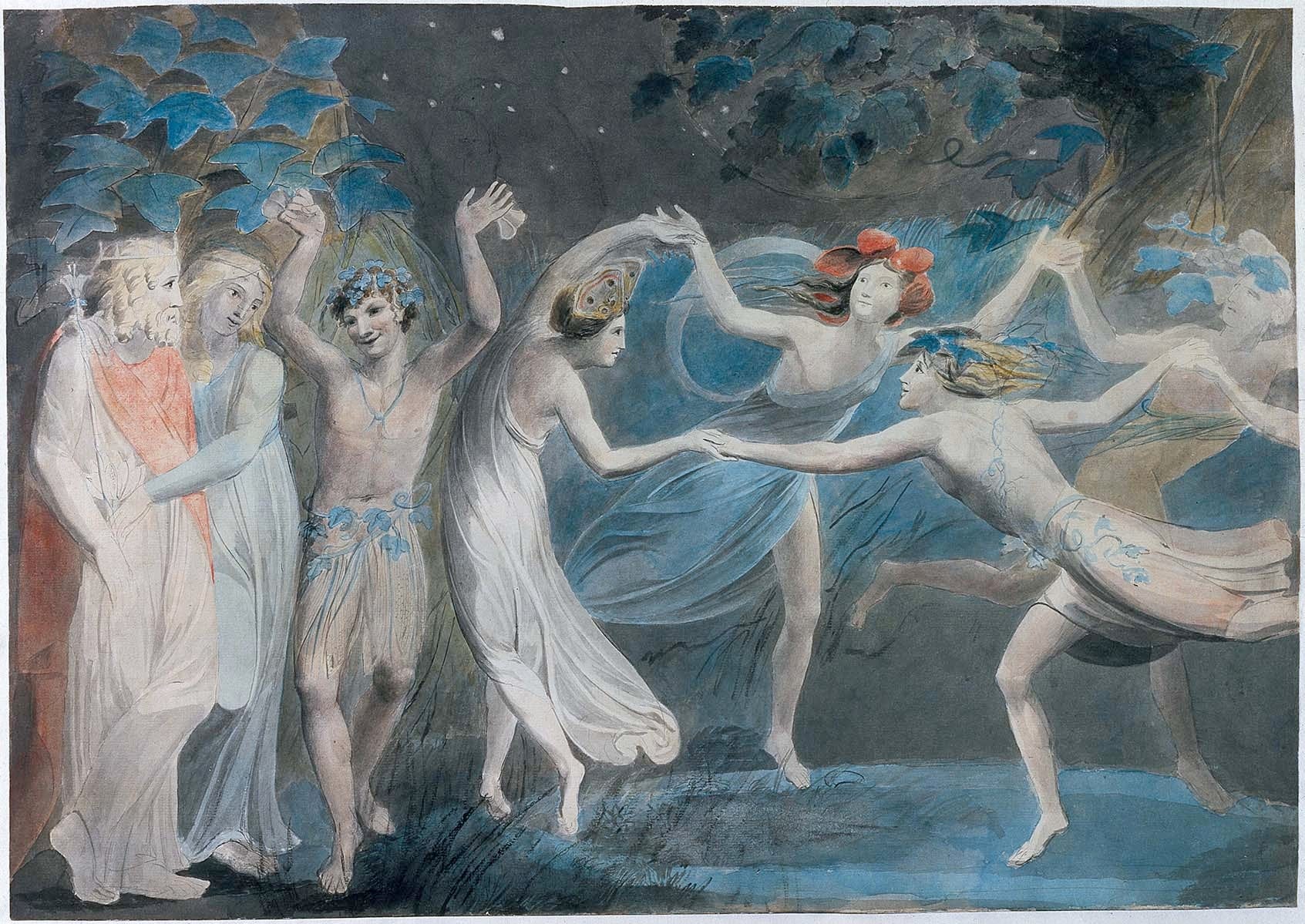
In 1789, William Blake published a poem called Nurse’s Song. In it, a nurse hears the voices of children playing on a green outside, and the sound fills her with a sense of peace. As the day heads towards evening, she calls them in, but the kids complain that there’s still some daylight left, pointing to the birds in the sky and the sheep on the hills as proof. The nurse caves and lets them stay out playing.
Five years later, Blake published another poem with exactly the same title. Once again a nurse hears the voices of children playing on the green, but this time the sound reminds her of her own youth, and her face goes pale. She calls them inside, telling them:
“Your spring and your day are wasted in play.”
As ever, it’s some brilliantly vivid poetry from Blake, where he presents you with two completely different ways of experiencing the same world. Both nurses are adults with responsibilities, and they both know at some point the kids will have to come inside. The difference is that the first nurse can still take part in the kids’ joy just by hearing it, while the second is almost offended by it: their enjoyment of the present reminds her of something she doesn’t have anymore. The even sadder part is that she now wants to deprive them of it too.
Both poems are in Blake’s Songs of Innocence and of Experience, of which the subtitle is Shewing the Two Contrary States of the Human Soul.2 As I write this, imagining you reading it, I’m wondering whether you can recognise something of both nurses in yourself, regardless of how many birthdays you’ve had. I’m also wondering what it is that happens to us between the time we can’t understand why anyone would want to stop us playing and the time we can’t understand why anyone would want to start. And whether it’s inevitable.
The Dark Clouds of Purpose
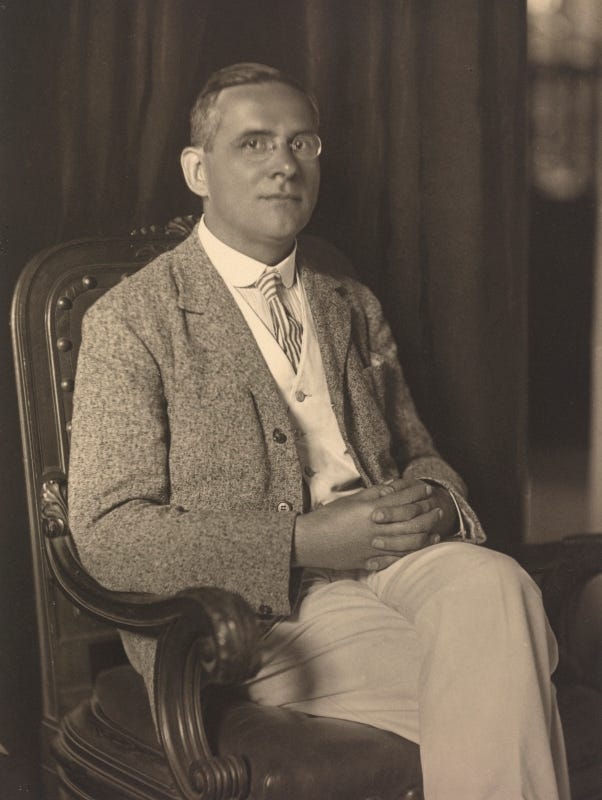
In 1927, the philosopher Moritz Schlick published a cracking essay with a pretty ambitious title: On the Meaning of Life. Schlick is best known for being a founding figure of logical positivism and the de facto leader of the Vienna Circle. That crew were into hardcore science, maths, and logic, and they were very suspicious of metaphysics.3 Which makes it a bit surprising that he spent some of his time working on a philosophy of youth.
He starts the essay revisiting ground that Schopenhauer had already been over long before him: you spend a lot of your life wanting things you don’t have. That wanting then generates a fair amount of suffering, which you imagine will disappear when you finally get what you want. For a little while it usually does, but that satisfaction rarely lasts long, and before you know it, you’re back on the wheel of desire again, wanting something else. Schopenhauer had a pretty pessimistic view on this, whereby you’re condemned to oscillate between suffering and boredom. But Schlick wondered if there’s a way out.
He asks you to imagine stopping people on a busy street and asking them where they’re going in such a hurry. Once you’ve established the purpose of their journey, you’d then ask them about the purpose of that purpose, and so on (don’t blame me if you do this and get a clip around the ear!). Schlick reckons that after relatively few steps, most people’s answers would lead back to the need to maintain their existence. But what’s the point of maintaining your existence? Schlick writes:
“In truth, we shall never find an ultimate meaning in existence, if we view it only under the aspect of purpose. I know not, however, whether the burden of purposes has ever weighed more heavily upon mankind than at the present time. The present idolizes work.”
Given he wrote that in 1927, God knows what he’d think of modern life now. He says that when you’re young, you’re told you need to prepare yourself for adulthood. When you get to adulthood, you need to establish yourself, and once you’re established, you need to start getting ready for retirement. Then, when you finally retire, you just sit around reminiscing about how good it was when you were young. Schlick thought that was crazy.
We treat youth as a period of preparation for the serious business of living, then end up looking back on that period of preparation as the most meaningful part of our lives. It’s like going on holiday then spending the whole week preparing yourself for the following week’s holiday, and then when that week comes, doing the same thing again. Schlick thinks you make a similar mistake with the different stages of your life, where each stage is seen as somehow incomplete. Whatever value it has is borrowed from another stage that hasn’t arrived yet or has already been and gone.
In reality, rather than there being some sort of superior existence waiting for you once you get all the preparation out of the way, there are just successive days in which you either live or keep preparing yourself to live. Schlick’s main argument is that the ultimate meaning of existence lives in activities that are worth doing for their own sake, and he calls those activities play.
As I explored recently in What Are You Playing At?, this philosophical understanding of play goes well beyond frivolous games and other activities we tend to associate with leisure time.4 Things like gardening, painting, investigating a scientific problem, or teaching somebody something can all become play. Schlick writes:
“Human action is work, not because it bears fruit, but only when it proceeds from, and is governed by, the thought of its fruit.”
So just because you get paid to do something doesn’t mean it can’t be play, just like doing something in your spare time doesn’t automatically make it play. What matters is the extent to which you’re governed by the outcome. You could spend a Saturday afternoon pottering in your garage repairing an old chair and get totally absorbed in the process, or you might spend it checking how many people liked a picture of the table you repaired last Saturday. I’m sure you know which feels better, which is where Schlick makes an interesting distinction between pleasure and joy.
The Things You Do to Get Away From Your Life
Most people tend to see pleasure and joy as pretty interchangeable terms, but Schlick thinks they’re very different experiences:
“Pleasure wearies, while joy refreshes; the latter enriches, the former puts a false sheen upon existence.”
Both can give you some relief from the demands of everyday life, but they do it in different ways. While pleasure, in the sense that Schlick is criticising, diverts your attention, joy gathers it. It’s like the difference between two hours spent mindlessly scrolling through your phone and two hours engrossed in conversation with someone who’s into the same things you are. In both cases you’ve probably experienced some sort of pleasure and lost track of time. But I bet you’ll come away from one of those experiences feeling a lot more alive than you did when you went into it and, from the other, wondering how the hell two hours went so quickly.
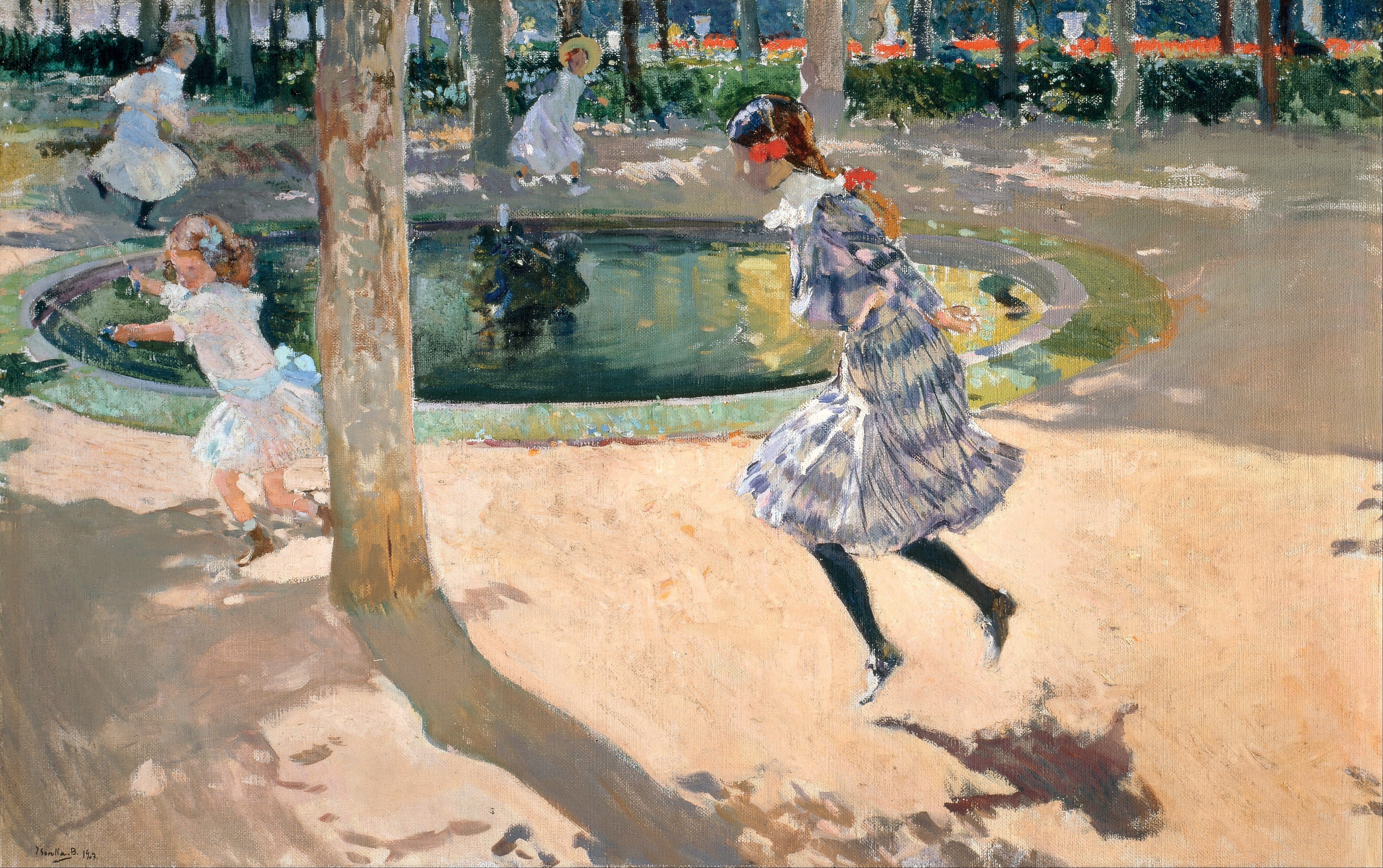
Schlick thinks that genuine joy needs a certain level of devotion, where something grabs hold of you so much that you can give yourself to it. And he reckons we can learn something about that from kids because they don’t need to be distracted from their lives to enjoy them:
“Before he has yet been caught in the net of purposes; the cares of work are unknown to him; he needs no diversion or release from the working day. And it is precisely the child that is capable of the purest joy…youth is really not overshadowed by the dark clouds of purpose.”
I’m always careful to avoid over-romanticising childhood because for some people it can obviously be anything but carefree. Blake was hyper-aware of this too, as his poems about the exploitation of children as chimney sweeps show.5 Nevertheless, I think Schlick’s distinction does help explain something about the weird arrangement lots of adults have made with life. You no doubt spend a lot of time doing stuff whose main function is to give you a means to something else, then spend some of those means on temporarily forgetting about the activities that gave you them. Even holidays are a way to recover from work so you can go back to work. There must be something more interesting you can do with yourself than that.
Schlick saw this as a problem for society as much as for the individual. He was a big critic of economic arrangements that need people to spend their lives doing monotonous and degrading work just to produce stuff that doesn’t really contribute anything to anyone’s quality of life. Telling someone doing a twelve-hour shift in miserable conditions they just need to cheer up and rediscover their youthful enthusiasm isn’t going to cut it. However, Schlick’s main proposal is that:
“The meaning of life is youth. The more youth is realized in a life, the more valuable it is, and if a person dies young, however long he may have lived, his life has had meaning.”
By which he doesn’t mean you peak when you’re seventeen and everything is downhill thereafter, but something much more hopeful.
The Child Who Comes Last
Schlick thinks that youthfulness is a particular way of being alive, not the number of years you’ve been alive:
“The enthusiasm of youth (it is basically what the Greeks called Eros), is devotion to the deed, not the goal.”
An eighty-year-old completely engrossed in the weeding on his allotment is, in Schlick’s philosophical sense, youthful. A twenty-year-old who evaluates everything in terms of what it might contribute to their CV is already well down the road to old age. Which isn’t a new idea. Probably most famously, Nietzsche got into this in Thus Spoke Zarathustra, where he describes three metamorphoses of the spirit.6
First, the spirit becomes a camel, which is capable of bearing heavy burdens. It takes on the weight of societal demands, expectations, duties, and values that have been handed down to it. The camel has an admirable strength about it, but it hasn’t got the freedom to decide what its own values are for itself. The lion acquires this freedom by fronting up to a dragon whose scales bear the words Thou shalt. It has the courage to refuse and rebel against the authority of inherited values and expectations. But Nietzsche says there’s something even the lion can’t do: despite having freed itself from old values, it can’t create new ones. For that, another transformation of the spirit is needed:
“Innocence is the child, and forgetfulness, a new beginning, a game, a self-rolling wheel, a first movement, a holy Yea.”
Perhaps surprisingly given our linear view of time, the child comes last. The culmination of Nietzsche’s spiritual journey isn’t the Yoda-esque wise old man who’s worked everything out and finally knows what’s what; it’s a kid who’s already been a camel and a lion. They’ve carried the weight of the world on their shoulders and fought for the freedom to put it down. Which is a very different kind of innocence from the innocence of someone who hasn’t experienced any difficulties yet.
If we go back to Blake’s two nurses for a second, I think this gives us a nice way of reading them. Experience has clearly affected the second nurse in a way that makes her pretty much incapable of participating in the children’s joy. Whatever she knows about life seems to have closed off some of the possibilities that she used to have available. Maybe there’s a kind of innocence that’s available to you after experience, rather than before it. A sort of capacity to begin again without needing everything you’ve already experienced to be undone or forgotten.
I think you can see a bit of this in people who’ve got exceptionally good at what they do and yet they’re still absolutely fascinated by it. Jonny Wilkinson, the former England rugby player, seems to be a great example of this to me.7 Maybe he’s just doing it for the clicks, but to me he still seems genuinely captivated by the simplicity of kicking a ball around outside:
His delight obviously still owes a lot to his experience. Without it, there are things he wouldn’t even know how to notice. There’s a massive difference between the simplicity of someone who doesn’t know much about something and the simplicity of someone who’s come through the complexity of it and discovered something fun, beautiful, and, dare I say it, joyous on the other side.
The Childhood You Haven’t Had Yet
In his Black Notebooks (1939–1941), Martin Heidegger makes a pretty uncomfortable observation about nostalgia for childhood.8 He says that what you miss about childhood isn’t childhood itself but a way of experiencing the world that you’ve failed to develop an adult equivalent of. Rather than admit that failure, you get nostalgic and blame getting older, which, as he writes, totally misses the point:
“We often escape into the world of fairy tales and child’s play and seek to retrieve this world or to mourn it as bygone. We thus misinterpret everything here excessively through relations to the biological and developmental.”
We basically act as if we either need to try and crawl back into childhood or mourn it as gone forever. Heidegger wants us to ask whether the real deficiency is that we haven’t found adult forms of poetry and thinking that can carry that richness forward:
“We take the more recent and older time as Lost childhood and do not realize that the deficiency is to be sought elsewhere: in the fact that we, as adults, do not find our way to the poetry and the modes of thought appropriate to childhood and outgrowing it.”
Looking back gives you a way of dodging present responsibility: you tell yourself that wonder and aliveness were just things that happened back in the day, and those days have gone now. Heidegger goes on:
“In the course of the flight to childhood, we abandon the necessity of a poetizing and thinking which, like all of this (even the childlike), must not be explained and interpreted according to the stages of life but, instead, is to be grasped as originating out of beyng itself.”
So wonder, rather than being some sort of biological phase you grow out of, simply comes from the sheer fact that a world opens up to you at all.
Think about the little patch of woodland that was fascinating to you as a kid. You might have spent hours in there building dens, making Tarzan swings, playing hide and seek, and telling stories about the creatures that lived there. As an adult, that same wood can be way more than just a place you go to walk the dog or get your steps in.
You’re now capable of learning about the extraordinary biological processes going on in that woodland, reading the poetry of someone who’s spent a lifetime thinking about such places, trying to capture the way the light pokes through the trees on a spring morning in a painting, or coming to appreciate the unique history of the landscape you live in. There are things you can experience and wonder about as an adult that you couldn’t even have conceived of as a kid. It’s not as if the trees ran out of things to be interesting about while you were getting older. Where Schlick emphasises preserving the spirit of youth, Heidegger emphasises developing forms of youthfulness you’ve never experienced before.
This is closely related to Heidegger’s later distinction between calculative and meditative thinking.9 As I’ve written about before, calculative thinking is all about what you can do with things and how you can organise them, as well as what you can predict about them and how they might serve your purposes. It’s obviously indispensable to much of modern life, but Heidegger thinks it increasingly dominates your relationship with the world.
Meditative thinking, on the other hand, gives you the chance to consider what your relationship with things means and to attend to aspects of their existence that your calculations don’t “disclose.” William Blake also famously said:
“If the doors of perception were cleansed every thing would appear to man as it is: infinite.”10
Heidegger’s version of this involves recognising that what you know about the world, however much you know, doesn’t exhaust what can show itself. A botanist can know a lot about a tree and still be amazed by the fact that such a thing exists. It just requires something other than the frantic accumulation of new experiences. The most familiar thing in your world might reveal something you haven’t noticed about it before.
All of which highlights something interesting about the difference between novelty and youthfulness. You can spend your whole life chasing novel experiences and getting more and more difficult to impress. Each new thing has to be a bit more spectacular than the last, just like this fella describes (NSFW):
Or you can develop a relationship with the things already in your life in which they keep disclosing something new. The latter sounds way more promising to me.
The Blossom and the Fruit
Towards the end of his essay, Schlick considers the life of a fruit tree. For the gardener growing the tree, the purpose of the blossom is to produce fruit. It’s essentially an intermediate stage and it’s valuable because of what will eventually come after it. But a poet might look at that exact same tree and see the beauty and transience of the blossom as already having value in itself. Schlick says:
“The blossom in fact bears its value in itself, and this value is realized even if the fruit should happen to come to nothing.”
Regular readers will know I’m always banging on about my allotment. In fact, I’ve just planted two new pear trees this autumn. From my gardener’s perspective there can be a lot of frustration when something you’ve carefully nurtured doesn’t produce any fruit—our plum tree was a prime example this year. But I don’t think I have to choose between being a gardener and being a poet. I can cultivate something for the sake of what might come from it while appreciating the amazing thing that’s happening before my eyes at the same time. Which also brings me to something in my own thinking about syntropy.
I often talk about the unfinished character of life and an orientation towards possibilities that haven’t been realised yet. A syntropic life is one where the possibilities for living can expand rather than progressively contract. But if you’re not careful that can end up back in the same predicament Schlick describes at the start of his essay.
If life is always leaning towards something that hasn’t arrived yet, when do you get to just enjoy living? Schlick compares a meaningful life to a mountain path on which every turn reveals something worth seeing, regardless of whether you actually get to the top. You can have a direction of travel without the destination being the only thing that makes the journey worthwhile. So I think it’s important to distinguish between an orientation towards the future and an obsession with future outcomes.
When a kid builds something out of a pile of Lego, their activity opens up more possibilities. Halfway through building a castle, they might realise they’ve accidentally created something that would actually make a better spaceship, and off they go. The original purpose of the activity hasn’t been fulfilled, but it would be weird to see the spaceship as a failure. Their willingness to go with it opened up a possibility they hadn’t even considered at the start. So the present has value in itself, but it’s also where new possibilities for the future emerge.
The most youthful adults I know behave like this too. They can make commitments and go after things with loads of dedication and effort, but they don’t get so attached to their conception of the future that they lose their ability to respond to what the present moment offers them. The future is something they participate in bringing about rather than something they spend their lives trying to force into existence.
Growing Younger
Schlick never got to finish his philosophy of youth. Only a fragment of the first chapter of his proposed book was found amongst his papers. He intended to write about play as the soul of youth, beauty as its countenance, and nobility as its heart. Tragically, he was shot dead by a former student on the steps of the University of Vienna in 1936.
Almost a hundred years later, I think there’s still something really worthwhile about the project. We live in a culture obsessed with youth, but pretty hostile to the conditions in which youthfulness can flourish. People spend fortunes trying to look younger while arranging their lives in ways that leave them progressively less capable of enthusiasm, curiosity, spontaneous exploration, and joy. They worry about whether their skin looks the way it did ten years ago without necessarily asking whether there are as many things in the world that excite them as there were ten years ago.
Even the things that might help you develop this youthful relationship with life tend to just get turned into another set of purposes, whether it’s a step count or a Duolingo streak. I think there’s a different way of understanding what it means to mature. Maybe with every year that passes you could get a bit better at recognising things that are worthy of your attention. You could develop an appreciation for beauty that draws on all your experience, and develop forms of play that were inaccessible to you as a kid. Maybe you’ll become more capable of being surprised by things you thought you already understood.
That sort of youthfulness wouldn’t need to deny the fact you’re getting older. You’re gonna get more wrinkles and grey hairs, you’ll discover certain possibilities aren’t available to you anymore, and you’ll probably make more noises when you get out of a chair or pick something up off the floor. But none of that means the possibilities for a richer experience of living have been exhausted.
It’s also important to recognise that youthfulness doesn’t necessarily mean being happy: there’s a difference between happiness and aliveness. Kids experience fear, grief, conflict, embarrassment, disappointment, and all sorts of other things we conveniently edit out of our nostalgic recollections of childhood. Schlick actually thought that one of the advantages of getting older was that our feelings tend to become more enduring:
“Indifference and obtuseness are sure signs of a soul grown old.”
He goes on:
“The days of youth are in fact the period of deepest feelings, the time at which powerful impressions work most strongly on the heart, and everyone becomes a poet. This is undervalued for the most part, since at that time the feelings, for all their depth, are also more readily prone to alter and fly away; but anyone who in later years, when feelings are apt to be more persistent and lasting, can retain the strength of youthful sensations, will also find the ethical value of life deepened to ultimate felicity.”
Alfred North Whitehead makes a similar observation in Adventures of Ideas (1933), where he points out that youth is full of emotional ups and downs that come as “quick pleasure and quick pain, quick laughter and quick tears,” which is why he says:
“It is vivid rather than happy.”11
A kid can be devastated by something one minute and completely absorbed in something else five minutes later. As you get older, your capacity to ponder things develops, which is obviously useful for making good decisions, but it’s also how you end up going round in circles in your own head. There’s a big difference between dwelling in an experience and dwelling on it.
Whitehead also points out that one of the difficulties of youth is that “there’s no memory of disasters survived.” But as an adult, you can potentially keep hold of that vividness while drawing on the experience of having lived through some pretty awful things. Whitehead sees something of this in what he calls Peace:
“Peace is the understanding of tragedy, and at the same time its preservation.”
So maybe the opposite of youthfulness isn’t suffering but indifference to the world. You can be deeply upset by something precisely because you still care deeply about it. The ending of the 80s classic Stand By Me is perhaps a good example of this:
There’s probably no prescribed route to this way of being, and that would just risk making youthfulness another thing on your to-do list anyway. But it might be worth giving some thought to what you’re actually missing when you find yourself longing for an earlier period of your life. What was it about the world then that made you want to engage with it so enthusiastically? And what form might that enthusiasm take in the very different world you inhabit right now?
Somewhere in Blake’s world, there are still kids playing on a green as the evening approaches. One nurse hears them and is reminded of what she’s lost. The other hears them and finds something to rejoice in. I’d like to think you could spend the rest of your life becoming a little more like the latter, however old you happen to get. As Schlick puts it in the closing words of his essay:
“If we need a rule of life, let it be this: ‘Preserve the spirit of youth!’ For it is the meaning of life.”
If you’re currently in the market for some stocking fillers, I recently published a series of Syntropology pocket books. They’re available on Amazon, as is my novel for young adults The Syntropist. All my royalties go to charity.
Schlick, M. (1927/1979). On the Meaning of Life. Translated by Peter Heath. In Philosophical Papers, Volume II: 1925–1936, pp. 112–129. (Online PDF)
Blake, W. (1789/1794). Songs of Innocence and of Experience: Shewing the Two Contrary States of the Human Soul. “Nurse’s Song” (Innocence and Experience). (Online text)
In simple terms, the Vienna Circle generally had a view that meaningful statements were either true by virtue of logic and definitions or, if they made claims about the world, had to be testable in principle through experience.
What Are You Playing At? (Substack Post)
Blake, W. (1789/1794). Songs of Innocence and of Experience. “The Chimney Sweeper” (Innocence and Experience). (Online text)
Nietzsche, F. (1883). Thus Spoke Zarathustra, Part I, The Three Metamorphoses. Translated by Thomas Common.
Heidegger, M. (1939–1941/2017). Ponderings XII–XV: Black Notebooks 1939–1941. Translated by Richard Rojcewicz. Indiana University Press.
Heidegger, M. (1959/1966). Discourse on Thinking. Translated by John M. Anderson and E. Hans Freund. Harper & Row.
Blake, W. (c. 1790). The Marriage of Heaven and Hell, plate 14. (Online text)
Whitehead, A. N. (1933/1967). Adventures of Ideas. Free Press. Chapter XX, “Peace”, pp. 286–288. (Online PDF of the book)
I was sooooo much older then. I’m younger than that now!
Great article here John! Seems like the patterns for aging memory loss calcification etc are enforced and taught into us. Instructions for life youth growth and balance are mocked and demonized and obliterated out of us from our militarized authoritarian terrified cultures. An observation I’ve had for decades: i go to the nicest biggest park in my city all the time to walk to tan to have lunch to read etc, it’s close by so I might just live there someday! Ha! Anyway, I always watch people walk the paths. There is a concrete path, sidewalk, that instructs everyone where they should engage in there walk/run. And I would say 90-98% of people that use the park only ever stay on that tiny stupid fucking path. It is absolutely insane to my youthful minded brain. I just can not imagine why anyone would self confine themselves to a tiny narrow little safe trail in a giant man made landscape that has trees hills wild areas creeks and hidden areas… why do they all stay on the path? Safety fear control maybe there sneakers will get some dirt on them? I mean. Play. When I see kids trying to play all I hear is there parents constantly correcting them controlling them. The world desperately needs to remember how to play. I’ve dedicated my life to it.
Great article again, thank you.